Swaddling Twins: The Super Swaddle That Saved My Sanity
Swaddling twins comes down to three things: a wrap snug enough to survive a startle reflex (hips loose, arms secure), a repeatable assembly line so two babies get wrapped in under four minutes, and a hard stop the moment either twin shows signs of rolling. Do those three and the swaddle becomes what it’s supposed to be — the off switch for the startle reflex that ends newborn naps — twice over. Skip the technique and you get what we had in week two: two Houdinis, four free arms, and a hallway full of failed muslin.
A note on the title: the original blog that lived on this domain published “The Super Swaddle That Saved My Sanity” back in 2010, about these same twin trenches. This is that promise, made again with current safe-sleep guidance — because the super swaddle still saves sanity, and now there’s also a zipper version.
Why swaddling earns its keep, ×2
A newborn’s Moro (startle) reflex fires randomly during light sleep — arms fling, baby wakes, nap over. With one baby that’s an annoyance. With two babies whose naps you’ve painstakingly synced (see the newborn twin sleep guide), one startle can cost you the only overlapping quiet hour of your day. The swaddle contains the reflex so light-sleep twitches stay twitches.
The safety frame first, because it’s load-bearing: swaddled babies go on their backs, always, in their own sleep space, with the swaddle snug at the chest but loose at the hips (tight hip-wrapping is linked to hip dysplasia), nothing loose in the bassinet, and no swaddle at all once rolling is in play. That’s consistent with the AAP’s safe sleep guidance — and as always, your pediatrician outranks any blog, this one included.
The super swaddle: the wrap that actually holds
The standard diagonal burrito fails strong babies by 2am. What held ours is the arms-first double-lock — “super swaddle” is the traditional name and it deserves it:
- Lay the blanket square, one corner folded down about six inches. Use a big blanket — 44-inch squares or better; receiving blankets are too small for this job.
- Baby on, shoulders just below the fold. Before anything else, bring one arm straight down at baby’s side.
- Lock arm one: pull the blanket’s left wing firmly across the arm and chest, and tuck it under baby’s back on the far side. The arm is now pinned inside its own layer.
- Bottom pocket: fold the bottom corner up loosely over the legs — legs must stay froggy and free to bend. Snug chest, loose hips, always.
- Lock arm two: bring the second arm down, pull the right wing across, and wrap it all the way around the body, tucking the tail in front. Each arm now sits under its own tension layer — that’s the “super” part. One arm escaping doesn’t unravel the other.
The test: you should fit two of your fingers flat between swaddle and chest, and baby’s hips should bend freely. Tighter than that at the hips is a real orthopedic no; looser than that at the arms and you’ll be re-wrapping at 3am.
The two-baby assembly line
With twins the technique is only half the problem — the workflow is the other half. What worked here, every sleep, same order:
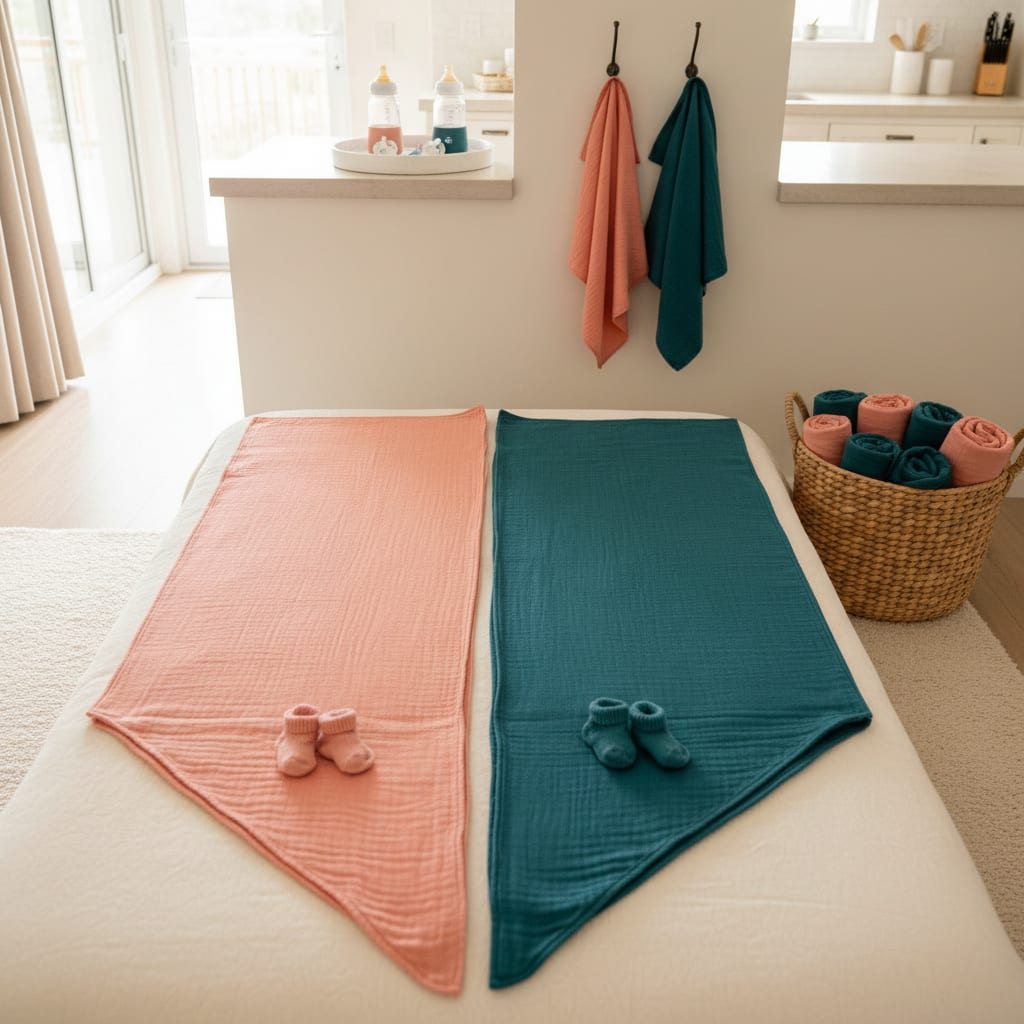
- Stage two blankets before the wind-down starts, laid out side by side on the changing surface or bed: coral for Baby A, teal for Baby B (the A|B color-code means the half-asleep parent never wraps the wrong baby in the wrong size).
- Wrap the calmer baby first. A calm baby wraps in 60 seconds; an escalating baby takes three minutes and radicalizes the audience. Get the easy win banked, into the bassinet, white noise on.
- Same wrapper, same wrap. Whoever’s on duty does both babies, so both get identical tension. Two parents wrapping one baby each produces one good swaddle and one 2am escape.
Total cost: under four minutes for two babies, once it’s muscle memory. It became the start-of-sleep ritual cue, too — by week six, the wrap itself made both babies go glassy-eyed.
The zipper shortcut (no shame in it)
At 3am, hand-wrapping is artisanal and zippers are industrial, and industrial wins. Velcro-and-zip swaddle sacks get you 90% of the super swaddle’s containment for 10% of the skill — for twins, that math is compelling. The worked example here is the Love to Dream Swaddle Up, which wraps arms up instead of down — some babies (our B) sleep dramatically better with hands near their face, and the newborn size fits from 5 to 8.5 pounds, which matters because twins often start small. Buy per-baby sizes, not one size for both: twins can be a pound or more apart, and swaddle fit is a per-baby measurement. We ran cloth super swaddles for day naps and zip sacks at night, which is the honest twin compromise between technique and survival.
When to stop — the non-negotiable part
The swaddle retires the day either twin shows any sign of attempting to roll — that’s an “is starting to try,” not an “has succeeded.” A swaddled baby who reaches their stomach can’t push up or turn back, which converts the swaddle from sleep aid to hazard overnight. For most babies that’s somewhere in the 2-to-4-month range; watch behavior, not the calendar.
Transition one arm out for a few nights, then both; expect a rough week of re-fired startles, and hold the schedule steady while it fades. And retire both twins together, keyed to whichever baby rolls first — one swaddled baby and one free baby in the same room is a bookkeeping error waiting for 3am. The post-swaddle era is also usually when real sleep structure starts paying rent: that story continues in sleep training twins in the same room.
FAQ: swaddling twins
Do both twins need to be swaddled?
Run the same policy for both while both are pre-rolling — synced sleep is fragile, and a free-armed twin startling awake takes the nap down with them often enough. If one twin genuinely fights the swaddle after a fair trial (a week, done snug), an arms-up sack is the compromise before giving up entirely.
Can twins be swaddled in the same crib to sleep?
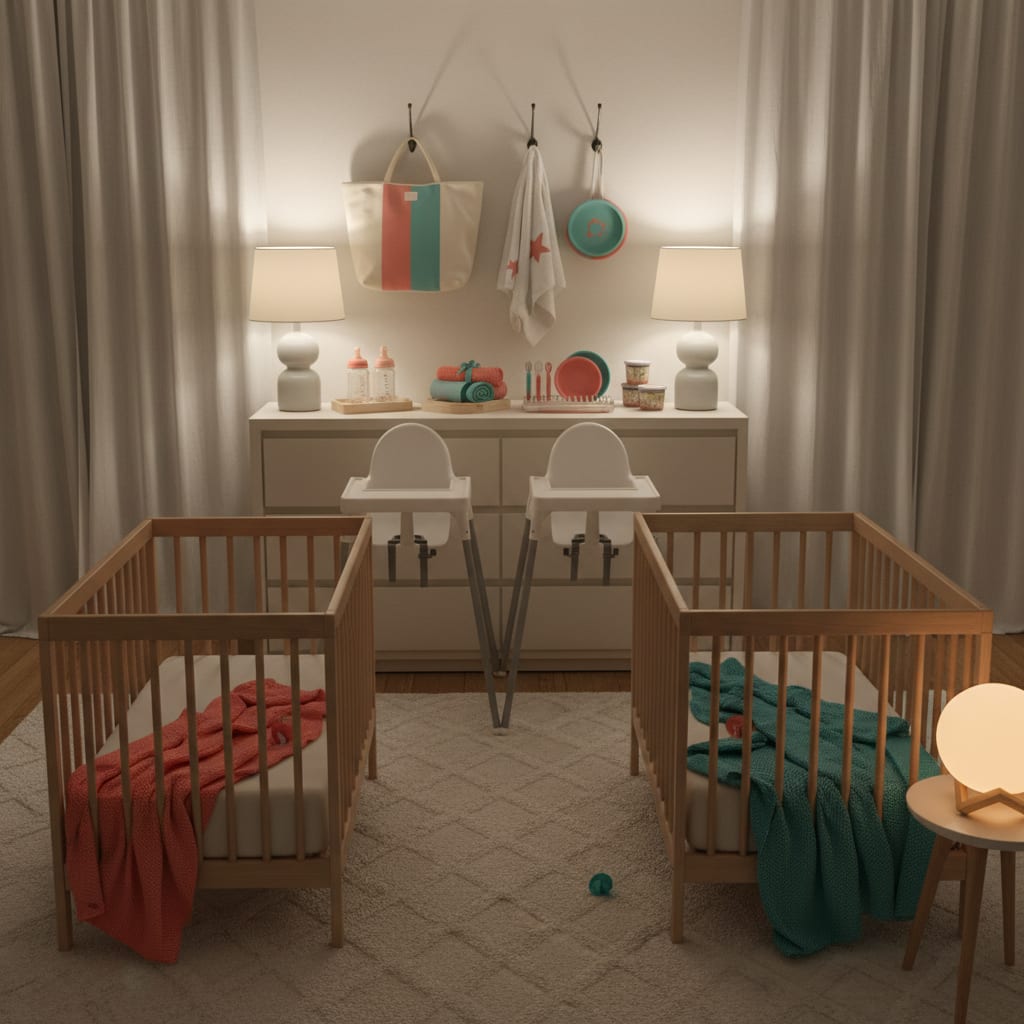
No — swaddled or not, current AAP guidance is one baby per sleep surface, including twins. Two bassinets side by side gives you the same-room closeness with the separate spaces safety requires. Your pediatrician gets the final word on your setup.
How tight should a twin’s swaddle be?
Same as any baby’s: two flat fingers of room at the chest, and hips free to bend into their natural froggy position. Twins are often smaller at the start, so check fit per baby and re-check weekly — newborn-stage babies outgrow swaddle tension fast.
When should you stop swaddling twins?
At the first sign either twin is trying to roll — typically somewhere between 2 and 4 months — and for both twins at once, keyed to the earlier roller. Transition one arm at a time and expect about a week of turbulence before the new normal lands.