Feeding Twins: Every Method, Honestly Compared
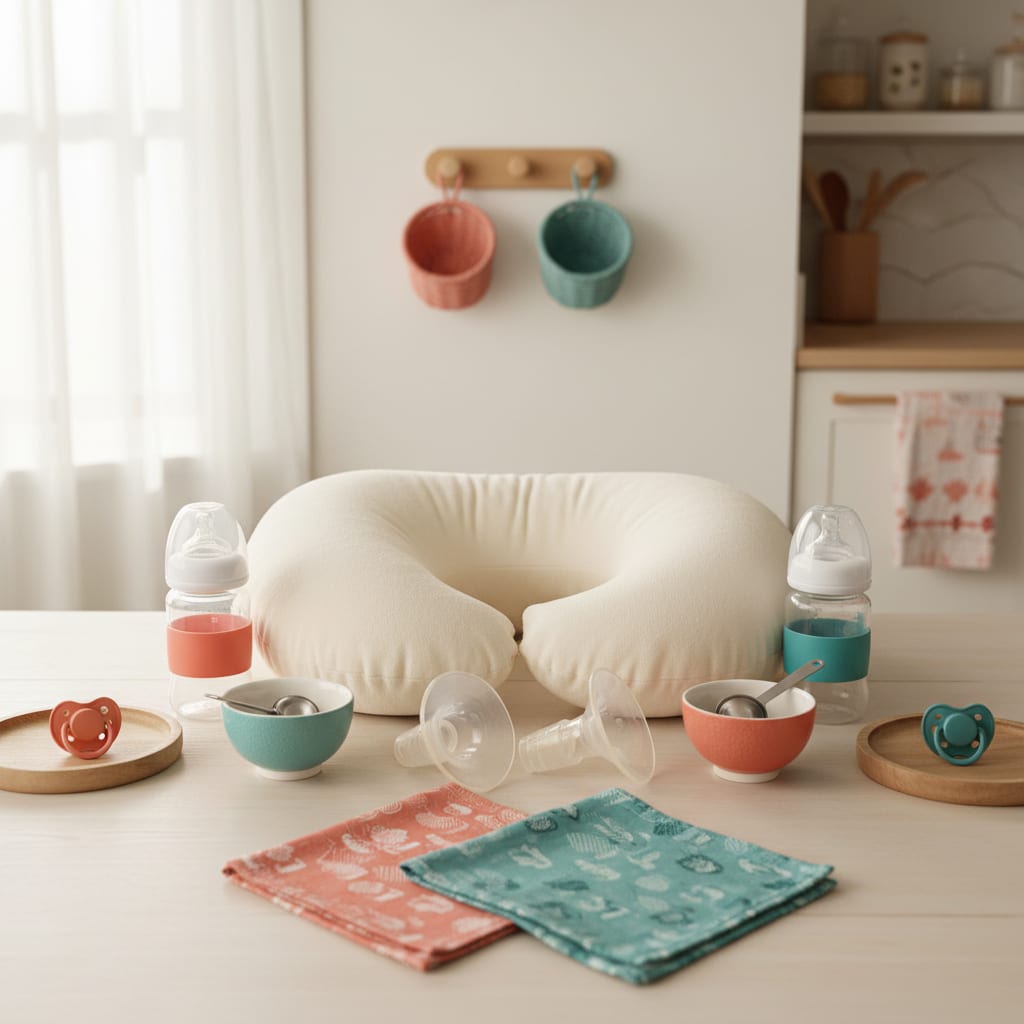
Feeding twins works by any method — tandem breastfeeding, bottles of formula, exclusive pumping, or the combination most twin families actually land on — and the honest comparison isn’t about which is “best” but about what each costs in time, money, flexibility and sleep when multiplied by two babies and sixteen daily feeds. The method that keeps your twins fed and you functional is the right one, and many families run different methods in the same week without ceremony. Here’s the real ledger, from a house that ran three of the four.
One frame before the table: feeding decisions with twins carry medical variables — prematurity, supply, weight gain — that a blog can’t see. Your pediatrician (and a good IBCLC, if breastfeeding is in the plan) are the actual authorities; this post is the logistics briefing you read between those appointments.
The four methods, side by side
| Method | The honest upside | The honest cost |
|---|---|---|
| Tandem breastfeeding | Fastest full round once mastered (~30 min for both); no bottle-washing shift; cheapest by far | A real skill with a real learning curve; equipment-dependent (twin pillow); you are the only staff |
| Bottle + formula | Anyone can feed; shifts become possible; intake fully visible in ounces | Costs the most (twin formula spend is real); 16 bottles/day of washing; still ~40+ min/round solo |
| Exclusive pumping | Breastmilk with shareable feeds; intake visible | The double shift: you pump and bottle-feed — often 8+ pump sessions on top of 8 feed rounds; hardest schedule of the four |
| Combo (mix of the above) | Flexes around supply, sleep and sanity; the most common twin outcome | Carries partial costs of each method; requires letting go of purity about any of them |
The pattern in that table: every method pays twice somewhere. Tandem nursing pays in skill acquisition, bottles pay in money and dishwashing, pumping pays in hours, combo pays in complexity. Pick which bill your household can afford — and give yourself standing permission to re-pick at 2am in week five. Switching isn’t failing; it’s management.
If you’re breastfeeding: tandem is the whole ballgame
Feeding two babies one at a time means a feed round takes 60 to 80 minutes and happens eight times a day — the arithmetic simply doesn’t close. Learning to feed both at once (usually in a double-football hold on a twin-sized pillow — the Twin Z Pillow is the standard worked example) cuts the round to roughly 30 minutes, which is the difference between breastfeeding twins being possible and being a myth. The positions, the pillow setup, the latch-order politics and the first-two-weeks reality all live in the dedicated tandem breastfeeding guide.
Two supply notes, hedged the way they deserve: yes, many mothers fully breastfeed twins — supply generally responds to demand, and twin-mom bodies get a double demand signal. And yes, plenty of twin mothers supplement anyway, for reasons spanning NICU starts to sleep survival. Both stories are common; an IBCLC in the first two weeks is worth more than every internet forum combined.
If you’re bottle-feeding: build the factory
Bottle-feeding twins is a manufacturing problem, and it rewards manufacturing solutions:
- Batch: prep once a day, not per feed. One daily session making all 16 bottles (or the day’s formula pitcher, where your pediatrician approves pitcher-mixing) turns eight scrambles into one calm assembly line.
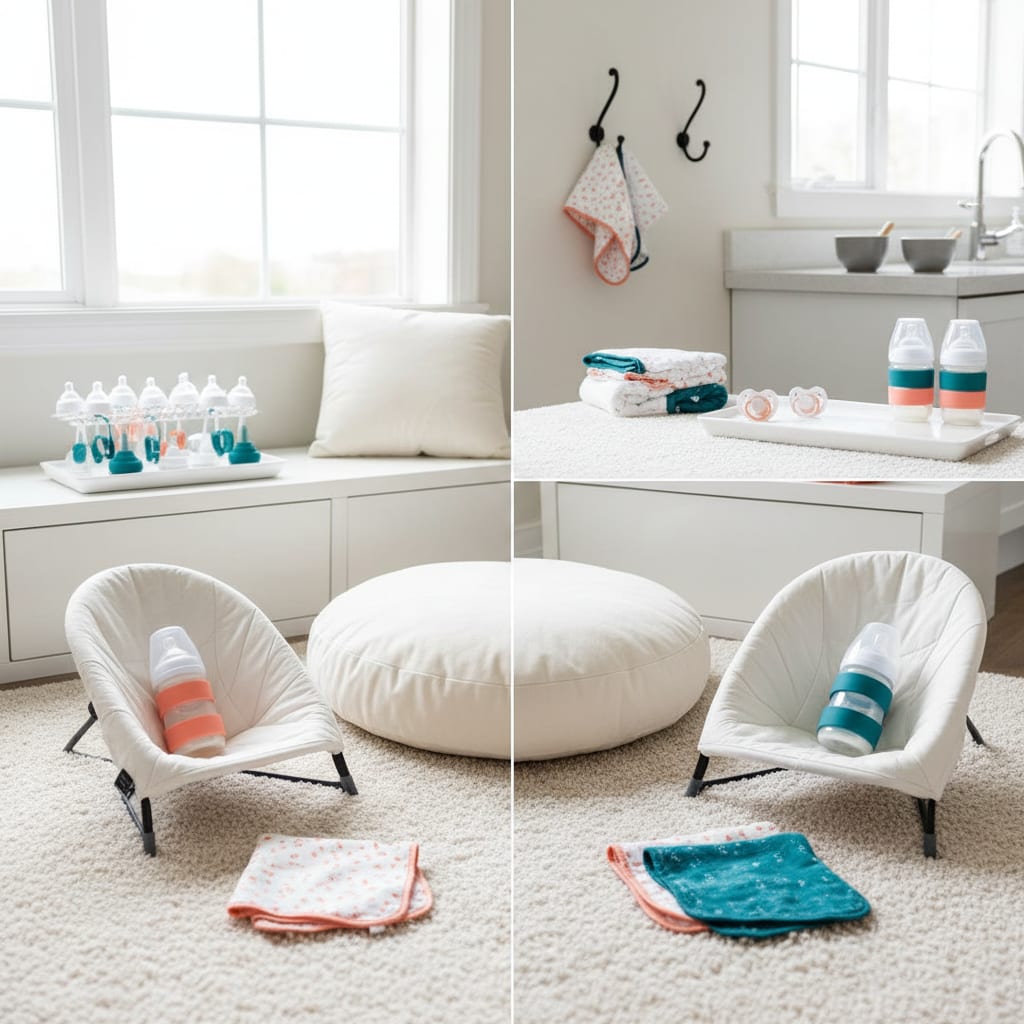
- Color-code: coral bands on A’s bottles, teal on B’s. Different babies often run different volumes or fortifications, and at 3am the band is the only thing standing between you and a mislogged feed — the A|B log tracks it all.
- Learn the double-feed. Solo parents master feeding two babies at once out of necessity — both babies in supported seats/bouncers slightly reclined, you on the floor between them, one bottle per hand. The non-negotiable safety line: never prop a bottle and walk away — propped bottles are a choking risk, and both the AAP and every pediatric feeding resource say the same. An adult stays, holding or actively managing both bottles, full stop.
- Paced and upright for reflux-y babies (twins, often early, see plenty of it) — and any real vomiting/weight concern goes to the pediatrician, not to a new bottle brand.
If you’re pumping: respect the double shift
Exclusive pumping for twins is the most labor-intensive option on the board, and the families who make it sustainable do three things: a double electric pump (this is not a manual-pump job — and check your insurance, which in the US typically covers one), pumping while someone else feeds or while babies do supervised mat time, and ruthless simplification everywhere else (fridge-storage rules learned once from CDC guidance, parts washed in bulk). If it’s your path, honor it — and if it stops being sustainable, see combo, below.
Combo feeding: where most twin families land
The quiet statistical truth of twin feeding: mixed approaches are extremely common — nursing some feeds and bottling others, one baby who latches and one who won’t, formula at night so a partner can own a shift, pumped milk stretched with formula. Combo isn’t the fallback; for twins it’s arguably the native method, because it lets you spend each resource (your milk, your money, your partner’s 2am, your sanity) where it buys the most. The only rule: whatever mix you run, run it synced — both babies fed in the same round, logged in the same place, per the one-clock schedule.
FAQ: feeding twins
Can you really breastfeed twins exclusively?
Many mothers do — supply generally scales with demand, and tandem feeding makes the hours workable. It goes best with early IBCLC support, a proper twin feeding pillow, and a household that protects the mother’s food, water and sleep like infrastructure. It’s also fine if it doesn’t go that way; most twin feeding stories are mixed ones.
How long does it take to feed twins?
Tandem (breast or double-bottle): roughly 30 to 40 minutes per round including burping and resets. Serial feeding: 60 to 80 minutes, which across 8 daily rounds is the arithmetic that pushes twin families toward tandem methods fast. Newborns feed 7 to 9 times a day, so the per-round number is the whole quality-of-life equation.
Is formula for twins “giving up” on breastfeeding?
No — it’s a logistics decision about an unforgiving workload, and combo feeding (some breast, some formula) is one of the most common twin outcomes precisely because it works. The babies need fed, fed babies need a functional parent, and the method ranking ends there.
Do twins need to eat at the same time?
They need to eat on the same schedule — when one wakes hungry, feed both, even if “at the same time” means one right after the other. Offset feeding clocks are the single fastest way to lose the newborn-twin months; the sync is what creates the gaps you’ll sleep in.