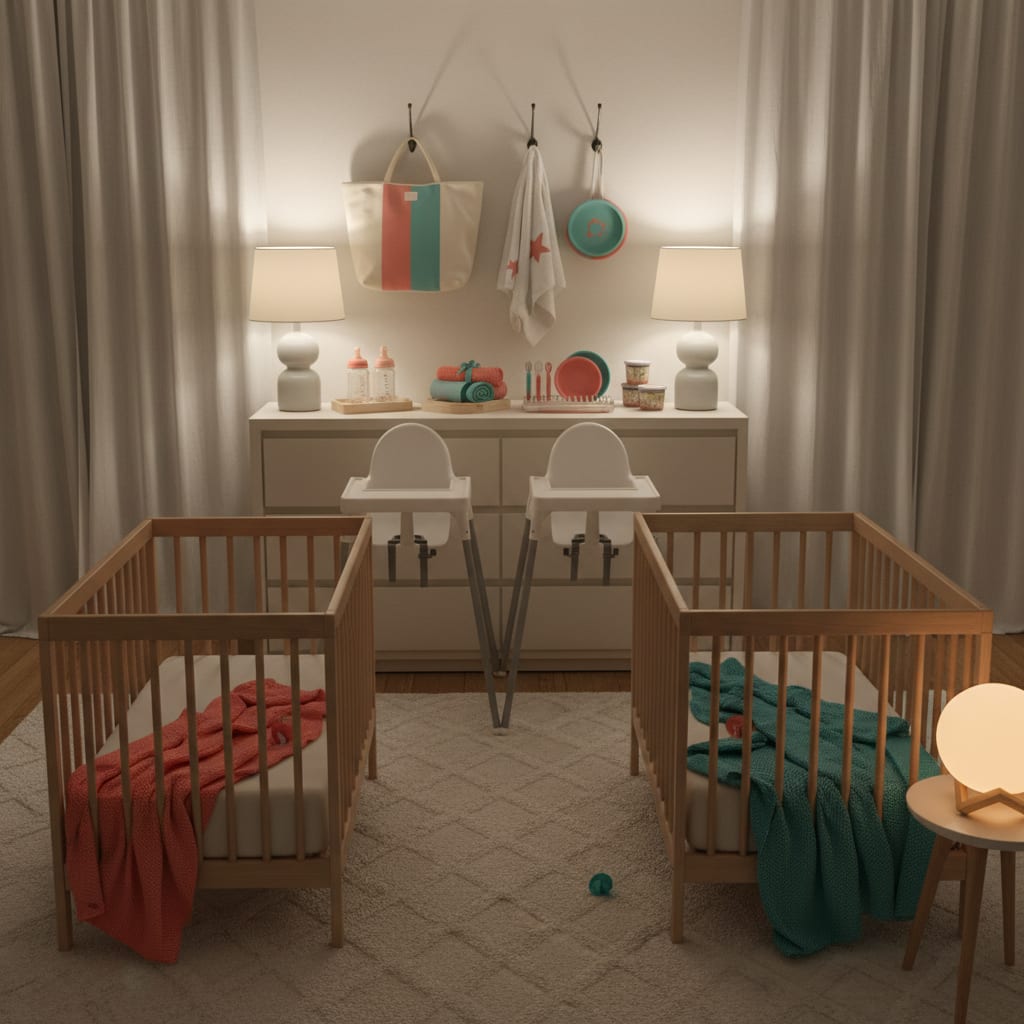
Tandem Breastfeeding Twins: Positions & Setup
Tandem breastfeeding twins — feeding both babies at once — runs on three mechanical pieces: a position (the double football hold is where nearly everyone starts), a firm twin-sized nursing pillow that holds both babies at breast height with your hands free, and a feeding station you never have to leave mid-feed. Get those three right and a full round for two babies takes about 30 minutes instead of the hour-plus of feeding them one at a time. That per-round math, times eight rounds a day, is the entire reason tandem feeding exists.
Get real help too: a lactation consultant (IBCLC) in the first week or two, ideally one who’s actually worked with twins, will fix in one visit what forums debate for months. This post is the logistics layer — latch trouble, pain, supply and weight-gain questions belong to the IBCLC and your pediatrician.
The positions, in order of usefulness
- Double football (double clutch). Each baby tucked along a forearm at your sides, feet pointing behind you, heads at breast height on the pillow. This is the twin workhorse: your hands can support two heads, neither baby lies on the other, and post-C-section (common with twins) nobody’s weight is on the incision. Start here; most twin nursing pairs never need anything else.
- Cradle-clutch combination. One baby in a classic cradle across your front, the other in football at your side. Useful when one twin latches easily (cradle side) and one needs more head control (football side).
- Double cradle (laid-back). Both babies crisscrossed on your front, you reclined. Comfortable later, once both babies latch like professionals and hold their own heads — it’s a stage-two position, not a starting one.
Learn the latch with one baby at a time for the first days if you need to — tandem is an efficiency layer on top of two working single latches, not a substitute for them.
The pillow is equipment, not accessory
A regular crescent nursing pillow cannot hold two babies — the geometry just fails, and your forearms end up doing 30 minutes of static labor per feed, eight times a day. Twin nursing pillows are wide, firm, flat-topped foam for exactly this reason. The two standard worked examples: the Twin Z Pillow (the big U-shape that surrounds you; doubles later as twin bottle-feeding and propped-sitting support) and the My Brest Friend Twins Plus (buckles around you like a tray table; firmer, flatter, with a back rest — the more structured latch platform). Either does the job; the deciding variables are your torso length and whether you want strapped-on structure or wrap-around bulk. If a full head-to-head verdict between them ever matters to you, that’s review-site territory rather than this site’s — but for the purposes of this post: you need one of them, and you need it before the babies come home.
Fit note: pillow height relative to your breast height is the whole game. Most latch pain in week one traces to babies sitting too low and dragging; stack a regular pillow underneath if needed until baby mouths arrive at breast height with zero hunching.
The station: build it once, never leave mid-feed
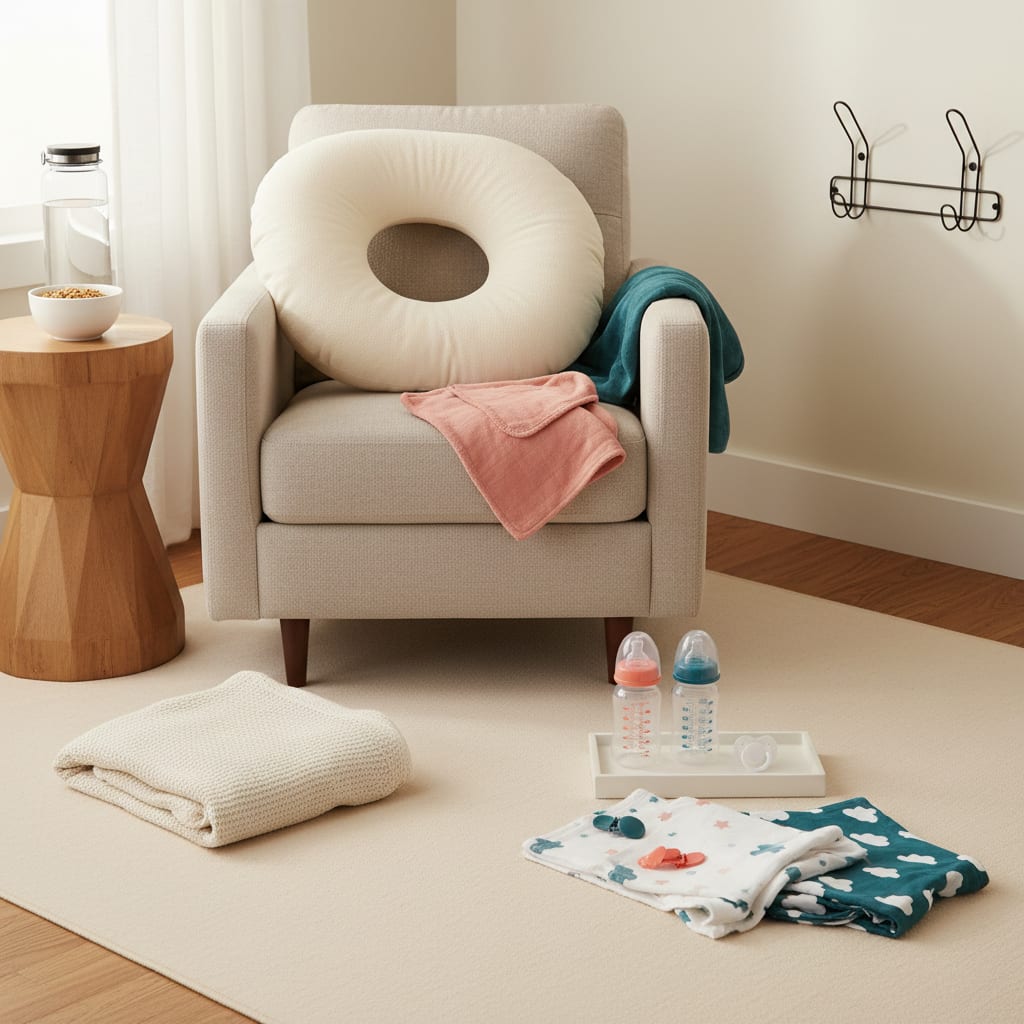
Once two babies are latched, you are structurally unavailable for fetching things. The station — a corner of the couch or a wide chair — carries, permanently: giant water bottle (thirst hits the moment the second baby latches, every time, it’s practically neurological), snacks, burp cloths ×2, phone and charger, the A|B feeding log and a pen, pacifiers, and two safe landing spots within arm’s reach (bouncers or a folded blanket on the floor) so babies have somewhere to go when you’re solo and someone needs burping first.
The solo-parent latch sequence, since nobody tells you: stage both babies within reach, sit into the pillow first, then load the calmer baby (they’ll tolerate a 60-second wait), then the hungrier one. Unloading runs in reverse. It’s awkward for about two weeks and then it’s a party trick.
The first two weeks, unsugarcoated
Expect the learning curve to feel like it isn’t one — day three is usually worse than day one, cluster feeding will make the whole schedule feel fictional, and one baby will almost always latch better than the other (feed the tricky latcher first each round, when your patience is newest; a consistently weaker latcher, painful latch, or slow weight gain = IBCLC + pediatrician, promptly — those are fixable problems that don’t fix themselves). Supply, hedged honestly: demand-driven supply means many mothers fully feed twins, and many excellent twin-feeding stories include supplementing — the combo patterns are in the feeding twins guide, judgment-free. What actually protects supply in the chaos: feeds or pumps happening regularly, water, calories, and the household treating the feeding parent as load-bearing infrastructure.
It genuinely does get mechanical — somewhere in weeks three to six, the fumbling two-person latch operation quietly becomes a one-person, thirty-minute round you could run half-asleep, which is convenient, because you will.
FAQ: tandem breastfeeding twins
Is it better to breastfeed twins together or separately?
Together, once latching works — a tandem round takes roughly half the time of two serial feeds, and across eight daily rounds that difference is hours of your life. Separate feeds still have their place: practicing a tricky latch, or savoring the rare one-on-one feed when another adult has the co-twin.
Do I really need a special twin nursing pillow?
For sustained tandem feeding, effectively yes — single-baby crescents can’t hold two babies at latch height, and your arms can’t do it statically for four hours a day. A firm twin-specific pillow (Twin Z and My Brest Friend Twins Plus are the standard examples) is one of the few genuinely mandatory pieces of twin gear.
Can you tandem feed after a C-section?
Yes — the double football hold exists partly for this, keeping both babies’ weight on the pillow at your sides and off the incision entirely. Many twin mothers tandem feed from the hospital bed with nurse help. Clear positioning against your own recovery with your care team, and let the pillow, not your abdomen, do the holding.
What if one twin is hungry and the other is asleep?
Wake the sleeper and feed both — the synced clock outranks the nap, because offset feeding schedules are how twin parents stop sleeping entirely. The standing exception is medical: if your pediatrician has set per-baby feeding instructions (common with small or early twins), those override the sync rule every time.