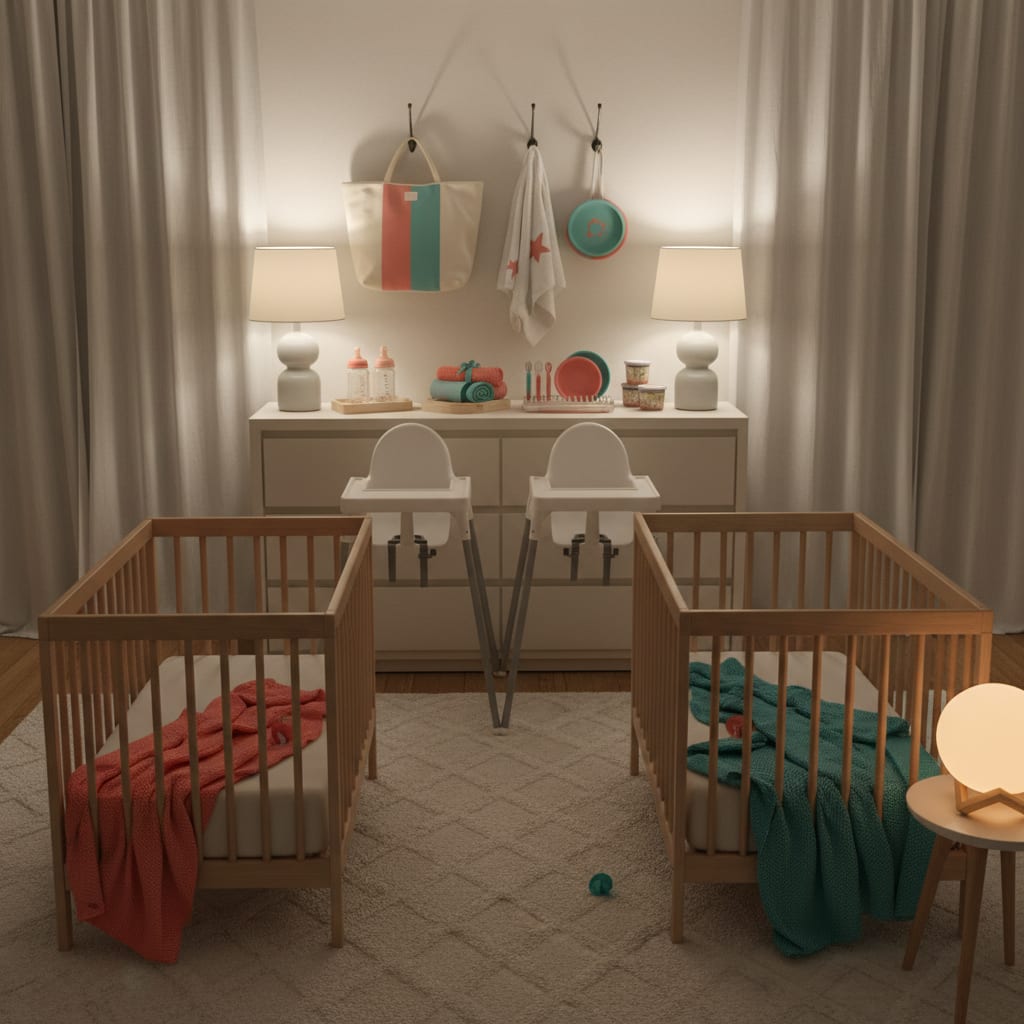
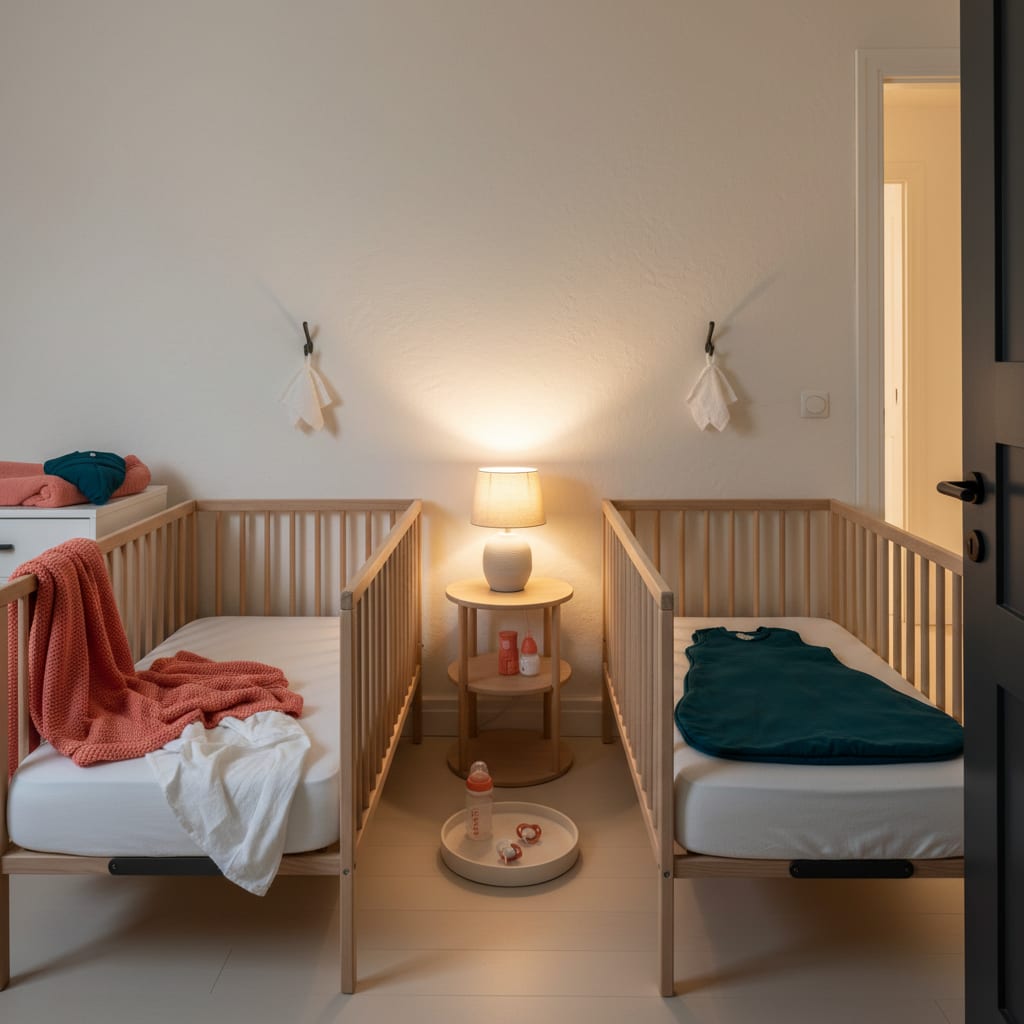
When One Twin Wakes the Other on Purpose
Deliberate waking is a different problem from chain-waking, and it needs different fixes. If one twin is genuinely doing it on purpose — waiting until the other is asleep, calling their name, throwing things over the rail, giggling when it works — the mechanism is a payoff, not a noise transfer. So you remove the payoff: no reaction from you, no reaction available from the sibling, and nothing in the crib worth throwing. Then you break the sightline, then you stagger who falls asleep first. Splitting them into separate rooms works, but it’s the fourth lever, not the first.
It usually shows up somewhere in the second year. Mine were about sixteen months and it lasted nine days.
First: is it actually on purpose?
Most twin waking is accidental, and I’ve written the audit for that version in twins waking each other up — three nights, who woke first, does it survive white noise and distance. Run that before this post if you haven’t.
The tells that it’s deliberate:
- They wait. The instigator is quiet for ten or fifteen minutes and starts once the other has actually gone down. An accidental waker makes noise immediately, because they’re not tracking anyone.
- They aim. Calling the sibling’s name, banging the shared rail rather than any rail, throwing over the gap rather than dropping over the side.
- They’re not upset. Deliberate waking comes with laughing, chatting or an expectant pause. Distress-waking sounds like distress.
- It stops when you appear. A child who goes quiet the second your shadow hits the door was doing something they know gets a response.
If it’s two or three of those, it’s intent. If it’s none of them, you have a sleep-timing problem wearing a costume.
Why it starts in the second year
It needs three things to arrive at once: enough motor control to stand, reach and throw; enough object permanence to know the sibling is still there in the dark; and enough social wiring to want a reaction.
That combination is squarely toddler territory rather than baby territory. The CDC’s 18-month checklist has children “points to show you something interesting” and “copies you doing chores, like sweeping with a broom” — a child doing that is a child who understands another person as an audience. In a shared room, at 7.40pm, you are not the audience. The person in the other crib is.
Standing is usually the physical unlock, because it turns a crib into a place you can shout from and reach out of. If you’re not sure your twins are there yet, Betteroo’s rundown of when babies pull up and stand covers the usual range.
Fix one: make the payoff worthless
Whatever you have been doing when it happens, do less of it. Go in silent. No overhead light, no talking, no picking up, no “we do not wake your sister.” Lay the woken twin back down, leave.
Two things matter more than the technique. Both parents do the identical version, and you do it every single time for at least a week — because a response that arrives on three nights out of seven is the most motivating schedule there is. This is the same principle behind not turning a night waking into a conversation, and it’s the part families quit on around night four.
Expect it to get slightly worse before it stops. That’s the behaviour being tested, not failing.
Fix two: break the sightline
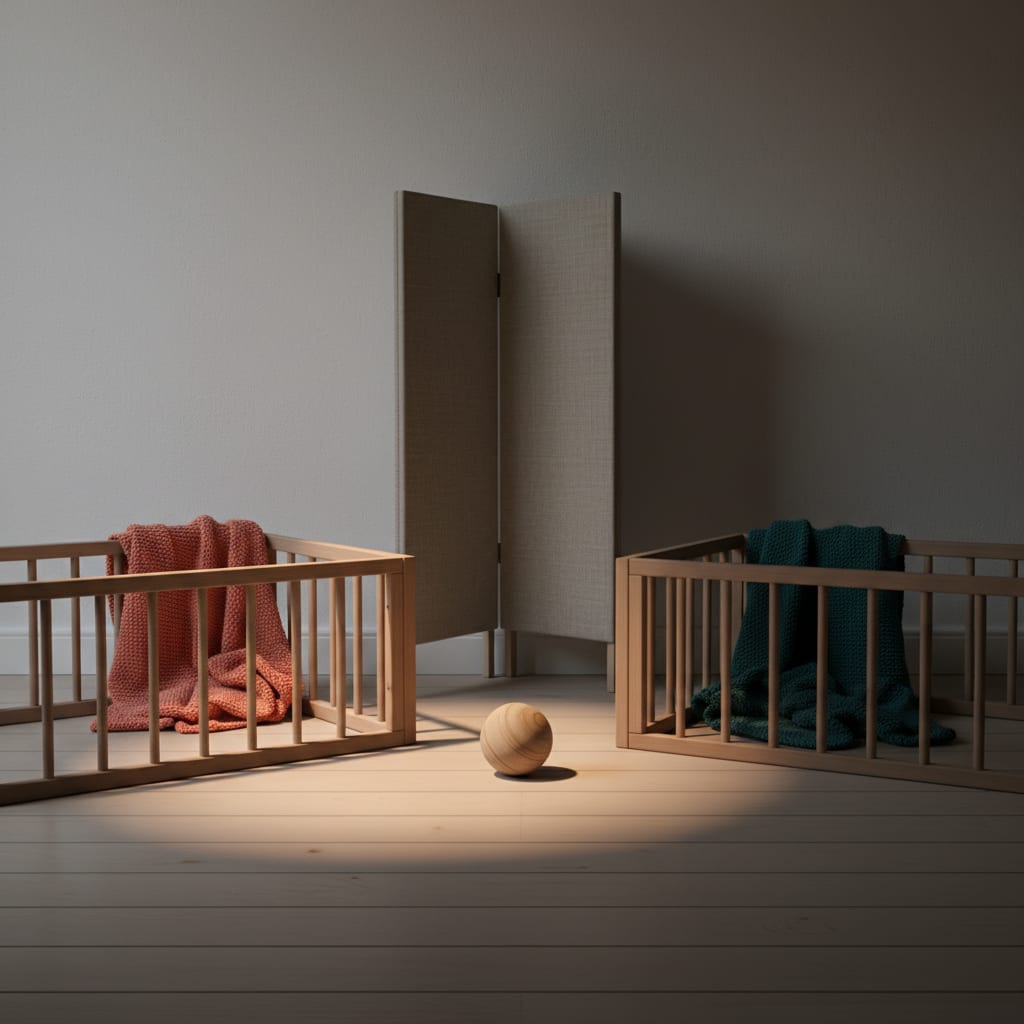
Two cribs facing each other across a small room is a stage. Turn them so the head ends are not in view of each other — along the same wall, or at right angles, or with the cribs’ solid ends toward each other.
If the layout can’t change, a floor-standing screen or a curtain hung from the ceiling between them works, provided it is genuinely out of reach of both cribs and can’t come down on a child. Nothing draped over a crib rail, and nothing attached to a crib.
Distance helps on top of that, and so does a steady white-noise floor — mostly because it takes the low-effort version off the table. A twin who has to shout to be heard usually stops trying.
Fix three: empty the crib of ammunition
Whatever is being thrown, take it out. For a child over twelve months, one lovey is fine; four of them is a supply. Pacifiers that get lobbed across the room come out too, or go in as several so the loss isn’t interesting.
While you’re there, check what the standing twin can reach from the rail: a shelf, a curtain cord, a nightlight, the other crib. In a shared room the reachable-object audit is a safety pass as much as a sleep one, and it’s the same check you make when one twin starts climbing out.
Fix four: stagger who falls asleep first
Put the instigator down ten to fifteen minutes first, alone, and bring the other in once the first is asleep. It removes the window the game lives in, which is the gap between one twin going down and the other following.
If that fails, do it the other way: the target goes down first and gets a head start into deep sleep, where they’re much harder to rouse. One of the two orders usually works, and which one is a property of your particular pair. The staggered version of bedtime, including how to run it solo, is in split twin bedtimes.
Fix five: the temporary split
If a week of consistent boring responses hasn’t moved it, separate them for five to seven nights. Not as a punishment and not announced as one — just a quiet change of rooms.
What you’re doing is letting the habit go cold. Bring them back together after a week of clean nights, and expect one or two test runs on the first night back; respond to those exactly as you did before and they usually die immediately.
If the split works and reuniting keeps failing, you’re into the longer question of whether this pair should share at all right now, which is its own decision and not a failure of anyone’s parenting.
When it isn’t behaviour at all
Two situations look identical from the hallway and need the opposite response. A regression or a sleep-timing problem produces a twin who is genuinely awake and looking for company rather than a reaction — they’ll be miserable rather than delighted, and it appears across naps too. And teething or illness produces a twin who wakes the other because they can’t settle themselves; that one deserves comfort, not consistency.
The test I use: are they enjoying it? Delight means behaviour. Misery means something else, and something else usually means the schedule, or a pediatrician.

FAQ: one twin waking the other deliberately
What age do twins start waking each other on purpose?
Usually somewhere in the second year, once they can stand and reach, know the sibling is still there in the dark, and want a reaction. Before about twelve months, waking each other is nearly always accidental — noise, not intent.
Should I separate twins who wake each other up?
Not first. Work through the response, the sightline, the crib contents and the staggered bedtime before you move anyone, because a split that happens on night two teaches nothing and often has to be undone. A five-to-seven-night split is a reasonable fourth step if the rest hasn’t worked.
How long does the deliberate phase last?
Commonly one to two weeks with a consistent response, longer if the response varies between adults or between nights. If it’s still going after a month of genuinely identical handling, treat it as a room-arrangement problem rather than a behaviour one.
Is it safe to hang a curtain between two cribs?
Only if it’s out of reach of both children and can’t be pulled down — ceiling-mounted, or a weighted freestanding screen well away from the rails. Nothing tied to a crib, nothing draped over a rail, and nothing inside either sleep space.