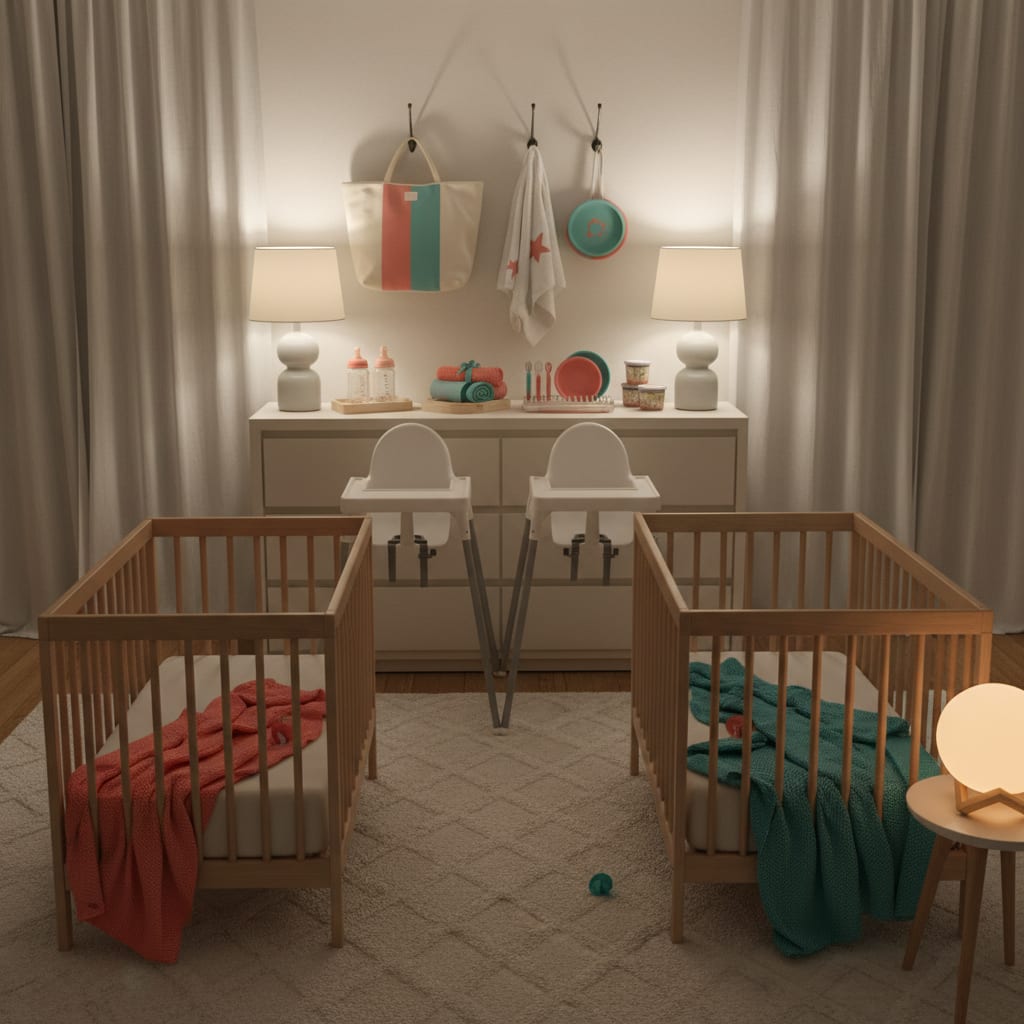
Betteroo for Twins: A Sleep Plan Built for Two Babies
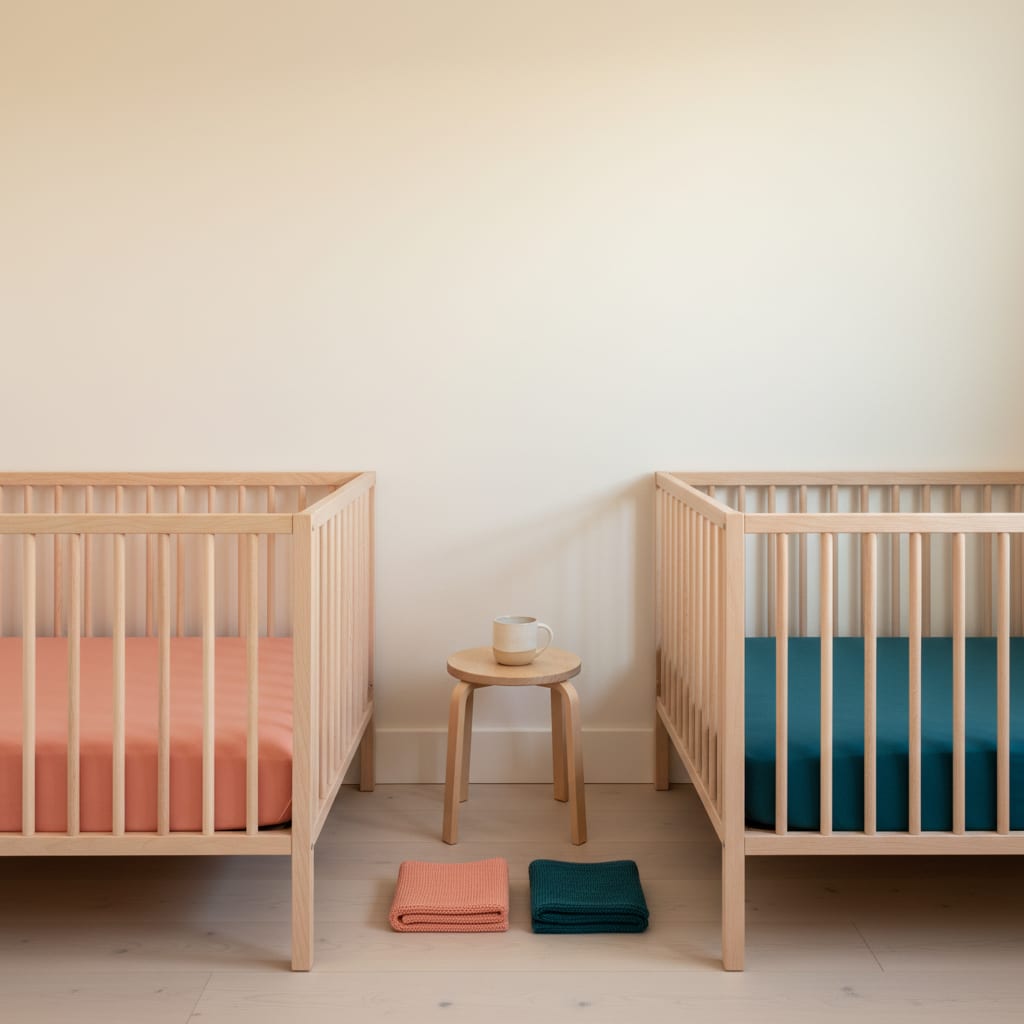
Betteroo is a personalized sleep-coaching app for babies and children from newborn to age six, and it builds plans for twins instead of leaving you to double a one-baby schedule. You take a free quiz of about three minutes, you get a plan built around your babies, and the plan adapts as they change. Twin plans account for staggered schedules, shared rooms and the reality that you cannot always get to both babies at once. It is gentle by default, with no cry-it-out required, and Joey, the in-app assistant, is there for the question you have at 2am.
If you have already tried one-baby advice and spent your nights translating it for two, that translation is exactly the step Betteroo removes. More than 80,000 parents have started with Betteroo (80,127 when we checked on September 25, 2026).
A twin parent who got both babies sleeping through
Elena’s review sits on Betteroo’s parent reviews page under “18 months · Twins”, and it is the story most twin parents are hoping to tell:
“I originally got the subscription to help get my twins to sleep through the night. They have been sleeping successfully and I am no longer in need of the app. It has been quite the journey but we have finally reached success with the process.”
Her goal was the one most twin households are chasing: not “better sleep” in general, but both babies sleeping through the night. She calls it “quite the journey”, which is how twin sleep goes, with two sets of progress and often one twin arriving first. And she ends in the best place a sleep plan can leave you: “I am no longer in need of the app.” The point was never to lean on a plan forever. It was to reach nights that run on their own.

Why one-baby sleep advice breaks at twins
Good sleep advice is not wrong for twins. It just assumes a household you do not have, and it breaks in three predictable places.
It runs on one clock. A wake window is a single number for a single baby. You have two, and they drift: a 20-minute gap between two feeds becomes a 20-minute gap between two naps, and often more by the afternoon. A one-baby schedule says nothing about the twin who is ready for bed while the other is still perfectly happy. Add a preterm pair tracking adjusted age, or two different temperaments, and a textbook schedule stops matching either child.
It assumes one sleeper per room. Most sleep-training guidance is written as though the baby has the room to themselves, so a few minutes of protest is only that baby’s problem. In a twin nursery it is also the other twin’s problem, and fear of that chain reaction is a common reason twin parents stall before they start. (It is usually overrated. The full picture is in sleep training twins in the same room.)
It assumes you have a free pair of hands. Respond quickly, stay until the baby settles: reasonable instructions for one child. At 2am with both twins awake, one of them is going to wait, and a plan that pretends otherwise is not one you can follow on night three.
What Betteroo does for twins
Most sleep resources are built for a hypothetical two-parent, one-baby household, so everyone else has to translate the advice to their real life. Betteroo skips that step. The FAQ on its reviews page puts the twin case plainly: “Twins and triplets get plans that account for staggered schedules, shared rooms, and the reality that you cannot always respond to both at once.”
That answers the three failure points above, one by one:
- Two clocks, not one. The plan is built for staggered schedules, so the twin who is ready for bed first and the one who is still happy both have a place in it.
- A room you share. Betteroo is gentle by default: responsive soothing, gradual transitions and whatever feels right for your family. In a twin nursery that matters practically as well as emotionally, because the less crying there is, the less there is to wake the other twin.
- One pair of hands. “The personalization is not cosmetic. It changes what the plan asks of you.” A plan written knowing there are two babies asks for something one adult can actually do at 2am.
It also treats your twins as two people. Every recommendation reflects your child’s age, developmental stage, feeding patterns, temperament and your comfort level as a parent, and temperament matters a lot here: two babies born minutes apart can settle completely differently.
What happens after the quiz
- A free quiz, about three minutes. Answer it for the babies you actually have, and it tailors your plan from day one.
- A personalized plan, not a generic PDF. It is built around your babies’ age, temperament and feeding patterns, and around your parenting style.
- Clear next steps in plain language. It is built for 2 AM, with no overwhelming dashboards and no rigid perfection standards.
- Joey, for the moment you are stuck. Ask whether a short nap is a problem or a wake window needs shifting and get real, science-aligned answers, like having a sleep consultant in your pocket.
- A plan that keeps up. “Regressions, teething, travel, nap transitions — your plan evolves so you’re never starting over.” Twins rarely drop a nap in the same week, so a plan that bends for one baby without being rebuilt matters twice over.
What other parents reported
Elena’s is the twin story on the reviews page, and the same page shows what the plan produced for single babies too, often fast.
Tess (“9 months · Night weaning”) saw seven night wake-ups drop to three after two nights: “He went from 7 wake ups to 3 wake ups! What a gift.”
Aateqah (“6 months · Night wakings”) started at 7+ wake-ups and 75-minute bouts of crying. After three weeks it was 0–2 wake-ups, and her baby sleeping through:
“Three weeks in, night wakeups dropped from 7+ to 2–3 and one night, zero. Naps nearly doubled. I went from 75-minute crying ordeals and 45-minute rocking sessions to nights where she sleeps straight through.”
And Kate (“14 months · Night wakings”) finished the way Elena did, with a family that no longer needed the plan:
“Thank you for this app. My baby’s sleep has improved significantly and I’m happy to go on our own now. Wouldn’t hesitate to rejoin if we had issues again down the line.”
Multiply any of those nights by two babies and it is a great many fewer trips down the hall.
Getting the most out of it with two babies
A personalized plan works best when you tell it the truth and can keep doing what it asks. These habits come from this site’s own twin-sleep work, and they make a plan like Betteroo’s easier to follow:
- Settle the safe-sleep setup first. Each twin gets their own firm, flat, bare sleep surface, on the back, in your room for at least the first six months. The two-surfaces-one-room setup is in safe sleep for twins. Sleep coaching sits on top of that.
- Describe your babies as two different babies. If one is a hibernating bear and the other treats bedtime as an opening offer, answer the quiz for the babies you actually have, not for an average of the two. When one twin is clearly behind, one twin sleeps, one doesn’t covers running two playbooks inside one bedtime.
- Decide on the bedtime shape before night one. Shared lights-out or a 15-to-30-minute offset is a logistics decision as much as a sleep one, especially on solo nights; split twin bedtimes covers when each works. Make that call, then follow the plan inside it.
- Keep one log for both. A single sheet or app with an A column and a B column means that when you ask Joey a question at 2am, you are answering from what actually happened rather than from memory.
- Give it a few weeks, and let one twin lead. Gentle approaches trade speed for calm, so judge the plan across the first two to three weeks rather than on one rough night. And expect one twin to get there before the other.
Who it fits best
Betteroo fits twin parents who want a plan built for their real household, who would rather not use cry-it-out in a shared nursery, and who want answers mid-plan instead of another hour of reading at midnight. If you have tried one-baby advice and are tired of translating it at 3am, this is the tool built for you. You can cancel at any time, and every plan comes with a 30-day money-back guarantee.
Keep the safe-sleep basics for both twins, and take anything medical, from reflux or illness to feeding worries or preterm adjusted-age questions, to your pediatrician first.
FAQ
Does Betteroo work for twins?
Yes. Twins and multiples are among the families it helps most. Plans for twins and triplets account for staggered schedules, shared rooms, and the reality that you cannot always respond to both babies at once.
Does Betteroo use cry-it-out?
No. Betteroo is gentle by default, with no cry-it-out required, using responsive soothing and gradual transitions. In a shared twin room, less crying also means less to wake the other baby.
What ages does Betteroo cover?
Newborn through six years old, and the plan adapts at every stage. For twins, that covers everything from newborn feeds to the nap transitions they rarely make together, through to toddler bedtimes.
Are the reviews on Betteroo’s site real?
Betteroo says its reviews come directly from real parents through in-app feedback, customer support conversations, interviews and written testimonials. Names are anonymized to protect privacy, while the quotes, sleep changes and family circumstances stay exactly as parents described them, and Betteroo “does not pay for reviews or script testimonials.”
Can I cancel Betteroo?
Yes. You can cancel at any time, with no contract and no commitment length, and every plan comes with a 30-day money-back guarantee. The quiz that starts the plan is free and takes about three minutes.