Twin Bedtime When a Neighbor Starts the Night Shift
When the neighbor on the other side of a thin apartment wall starts working nights, their morning lands exactly on your twins’ bedtime: alarm, shower, kitchen, keys, door. Then they come home around your dawn and sleep through your twins’ day. You cannot soundproof a rental, so work the problem in this order: log their noise for three nights, move both sleep surfaces to the quietest wall, run one steady sound machine all night, nudge bedtime so both babies are asleep before the loudest stretch, and have one short conversation with a specific ask.
The problem runs both ways — their noise reaches your babies at bedtime, your babies’ noise reaches them at noon — and neither half needs a villain.
Step one: find out what the noise actually is
Before you move furniture, spend three evenings writing down four things: the time of each noise, what it was (door, water, footsteps, music, car), which twin stirred, and whether that twin fully woke or resettled on their own.
A shift worker’s morning tends to be the same routine at the same time every workday, which is bad news the first week and good news after that: a predictable noise is one you can plan around. The log also tells you which twin is the light sleeper. It is often only one of them, and that changes the fix.
Move the babies, not the neighbor
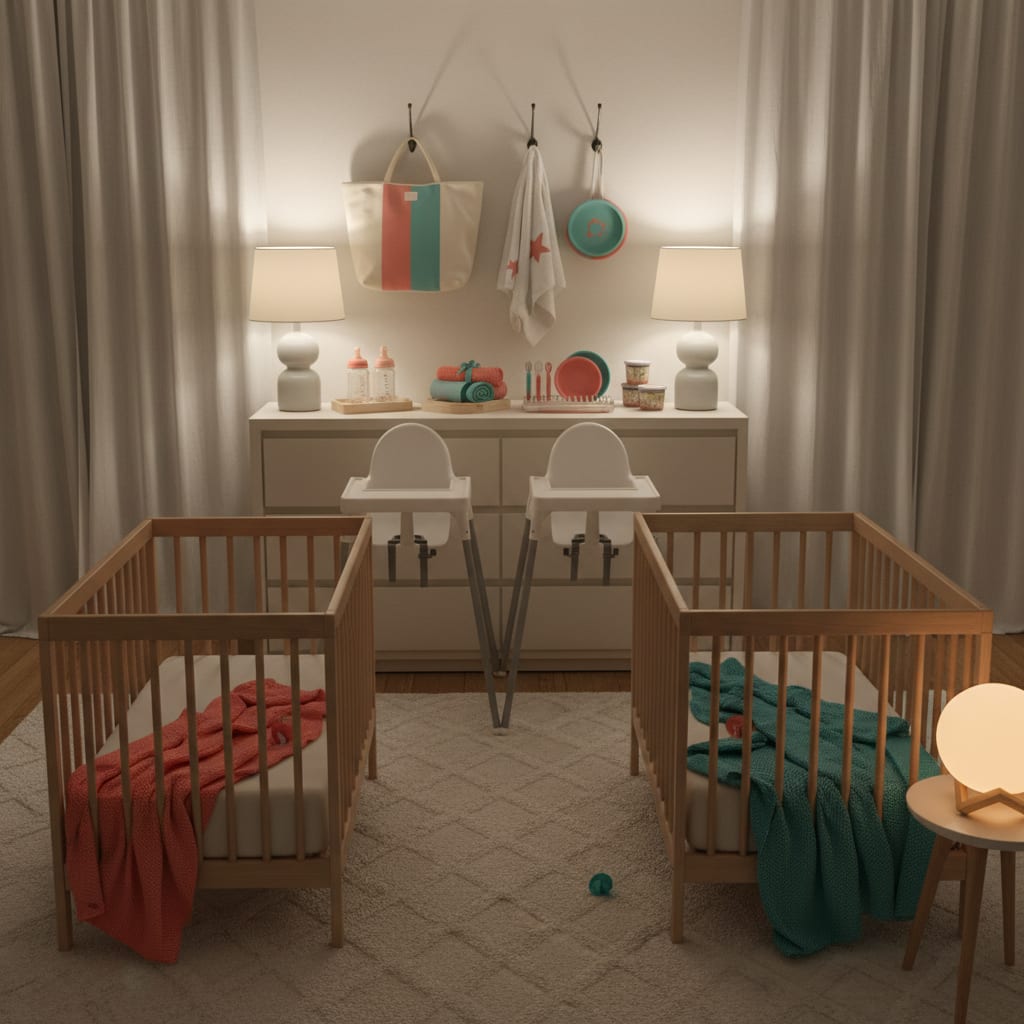
Look at the floor plan. Put both sleep surfaces on the wall furthest from the shared one, and keep them away from the hallway side if the stairwell or elevator runs past it.
The AAP recommends room-sharing “for at least the first 6 months”, so for a lot of twin families the twins’ room is the parents’ bedroom. If you have any choice about which room that is, the quiet side of the apartment wins.
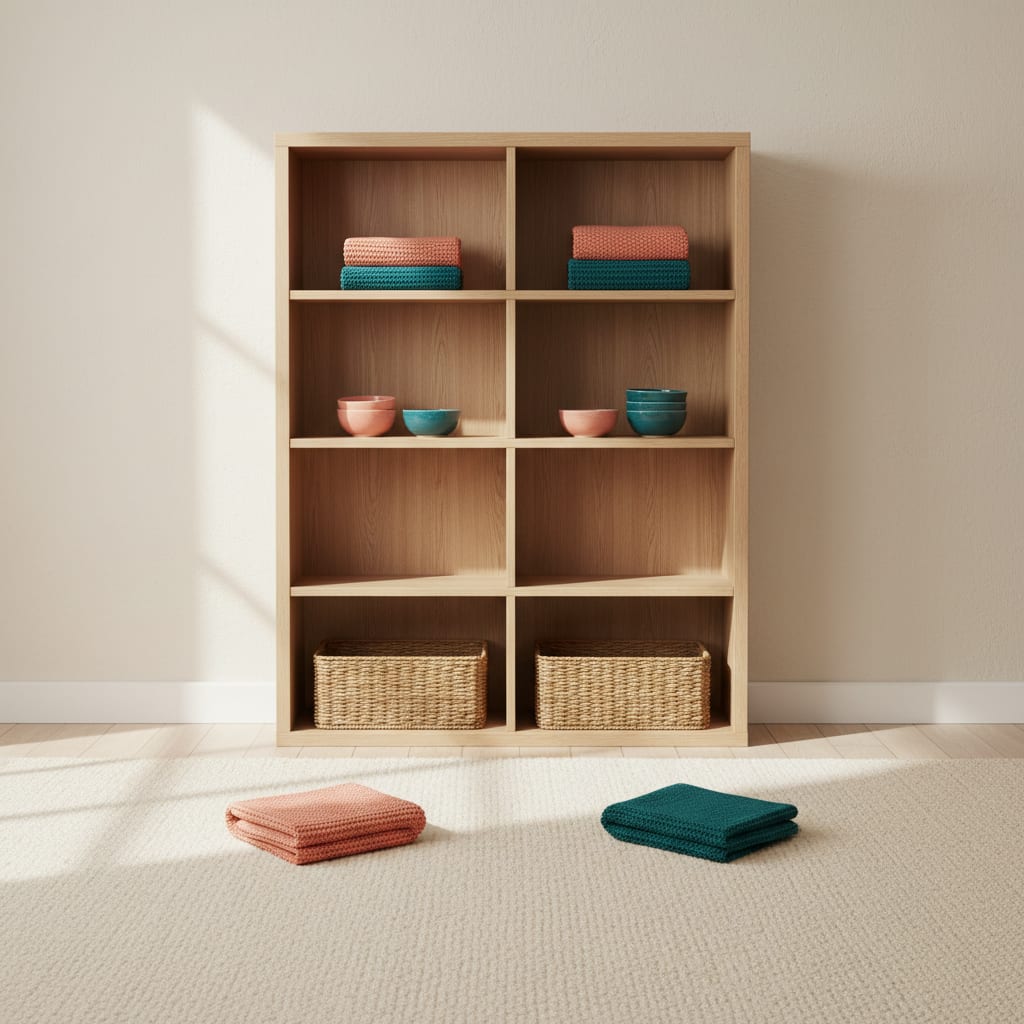
What you must not do is try to soundproof the cribs. The AAP’s safe sleep guidance is blunt: “Use a fitted sheet only—nothing else should be in the crib with your baby,” and it names “bumper pads or related products that attach to crib slats or sides” among the items to keep out. Each twin still gets their own firm, flat, bare surface, on the back — the full two-surfaces setup is in safe sleep for twins. If you want something heavy between you and the wall, put a bookcase there, not bedding.
Raise the floor with one steady sound
A door closing is not loud so much as sudden. Betteroo’s guide to using white noise safely with a baby explains why this matters: a continuous sound “raises the background floor so that those spikes are far less noticeable.” Its safety rules are specific — keep it “at or below about fifty decibels,” place the machine “at least seven feet, or about two meters” from the sleep space, and never use the maximum setting.
Three twin-specific points:
- One machine covers the room. Two babies do not need two machines. A mechanical fan-based unit like the Yogasleep Dohm gives a constant, non-looping sound, which is exactly what you want against a predictable spike.
- Place it between the noise and the babies, as far from both cribs as your room allows.
- No timer. The same guide notes that “the sudden silence when a timer stops can itself wake a baby.” A timer set to end at 9pm is useless against a neighbor whose front door closes at 10pm, and again when they come home near dawn. Run it until you get up.
Nudge bedtime around the loud window, a little
If your log shows the loudest stretch starts at, say, 7:30, aim to have both twins asleep before it begins rather than settling two babies in the middle of it. Settling during the noise is where one twin gets overtired and the other gets woken by the first.
Keep the nudge small. Betteroo’s explainer on how sleep pressure builds and drains frames its timing fixes as shifts of “fifteen to thirty minutes”, and warns that too much pressure “looks like frantic crying and early waking.” Dragging bedtime an hour earlier than your twins are ready for swaps one problem for another. If the loud stretch sits right on top of their natural lights-out, it can be easier to hold bedtime where it is and let the sound machine carry it.
If only one twin is bothered, you may not need a shared fix at all. Putting the light sleeper down first and the sturdier one 15 minutes later is a legitimate option — the mechanics are in split twin bedtimes.
When the door wakes one twin
It will happen. Get to the woken baby quickly and quietly, and if they need more than a quick resettle, take them out of the room so the other twin is not recruited. Your own light, footsteps and whispering are often louder in that room than the neighbor’s door ever was — the audit and fix order are in twins waking each other up.
The dawn return is the harder one. The same sleep-pressure guide explains that “in the last hours of the night there is little pressure left, so a small waking becomes a full one.” A door at 5:40am can end the night for a twin in a way the same door at 10pm would not. Keep the room dark and the sound machine running, and treat anything before your normal wake time as night: quiet voice, no lights on, back down if they will go.
Their sleep is in your twins’ day
The neighbor is trying to sleep through your mid-morning. The Sleep Foundation’s tips for shift workers already tell them that “earplugs and white noise machines can be effective at blocking outside sounds,” — they are dealing with the whole building, not just you. You still control your share of it:
- Put floor play, tummy time and the activity mat on the side of the apartment away from the shared wall, on a rug if you have one.
- Plan the loudest jobs — vacuuming, the double stroller banging out of the door — for hours when they are likely awake.
- Two babies crying at once through a wall cannot be prevented. You only have to avoid making it worse.
Talk to them once, with a specific ask
Keep it concrete and make it a trade: tell them roughly when your twins go down, ask whether the front door could be closed gently in that window, then ask when they sleep and offer your own adjustment in return. People on nights know about noise; they get everyone else’s all day.
Two babies, two reactions
Twins share a room and a birthday and still react to the same noise differently. If one twin sleeps through the neighbor’s routine and the other does not, stop running one plan for both — that is the whole argument of one twin sleeps, one doesn’t. If both twins’ sleep falls apart at once and the timing does not match the neighbor’s log, look for another cause first: illness, teeth or a developmental phase. Talk to your pediatrician about anything that seems medical.

FAQ
Will white noise keep a neighbor’s door from waking my twins?
It will not block it, but it softens the jump from silence to a sudden noise, which is what wakes a lightly sleeping baby. Keep it at or below about 50 decibels, at least seven feet from both cribs, and running all night rather than on a timer.
Can I pad the crib or the wall next to it to block the noise?
Not inside or on the crib. AAP guidance is a fitted sheet only, with no bumpers, blankets or pillows. A piece of furniture against the shared wall is fine; anything soft attached to the crib is not.
Should I move bedtime earlier to beat the neighbor’s alarm?
Only by a small amount, 15 to 30 minutes at a time. Moving bedtime much earlier than your twins are ready for leads to long settling and early waking.
Is it reasonable to ask a night-shift neighbor to be quieter?
Yes, if the ask is specific and small, like closing the door gently between two set times, and you offer to be careful during their daytime sleep in return.