Bottle Feeding Twins Alone: Safe Setups
Yes, one adult can bottle-feed two babies at once — and the safe version has a fixed shape: both twins supported in a semi-upright position, on the floor or on a twin-sized pillow, with you holding both bottles the entire time. No propping, no pillow wedged under a bottle, no walking away. Expect a full round to take 30 to 40 minutes including burping and resets, which is why solo twin parents learn the double-feed fast. Below are the three setups that work, what to do when one twin finishes first, and the prep shift that makes the whole thing survivable.
The rule with no exceptions
Never prop a bottle. Not with a rolled blanket, not with a positioner sold for exactly this, not “just while I do the other one”. The AAP is direct about it: if a baby can’t hold the bottle, someone holds it for them, and pillows or other props are not an option — a propped bottle makes it hard for a baby to stop when they need to, with choking and ear-infection risk attached.
This is the rule twin parents get quietly nudged to break, because two babies and two hands is the arithmetic that makes propping tempting. The setups below exist so you never have to consider it. An adult stays, hands-on, for the whole feed. Every time.
Setup one: the floor, between two seats
The workhorse, and the one most solo twin parents end up using daily.
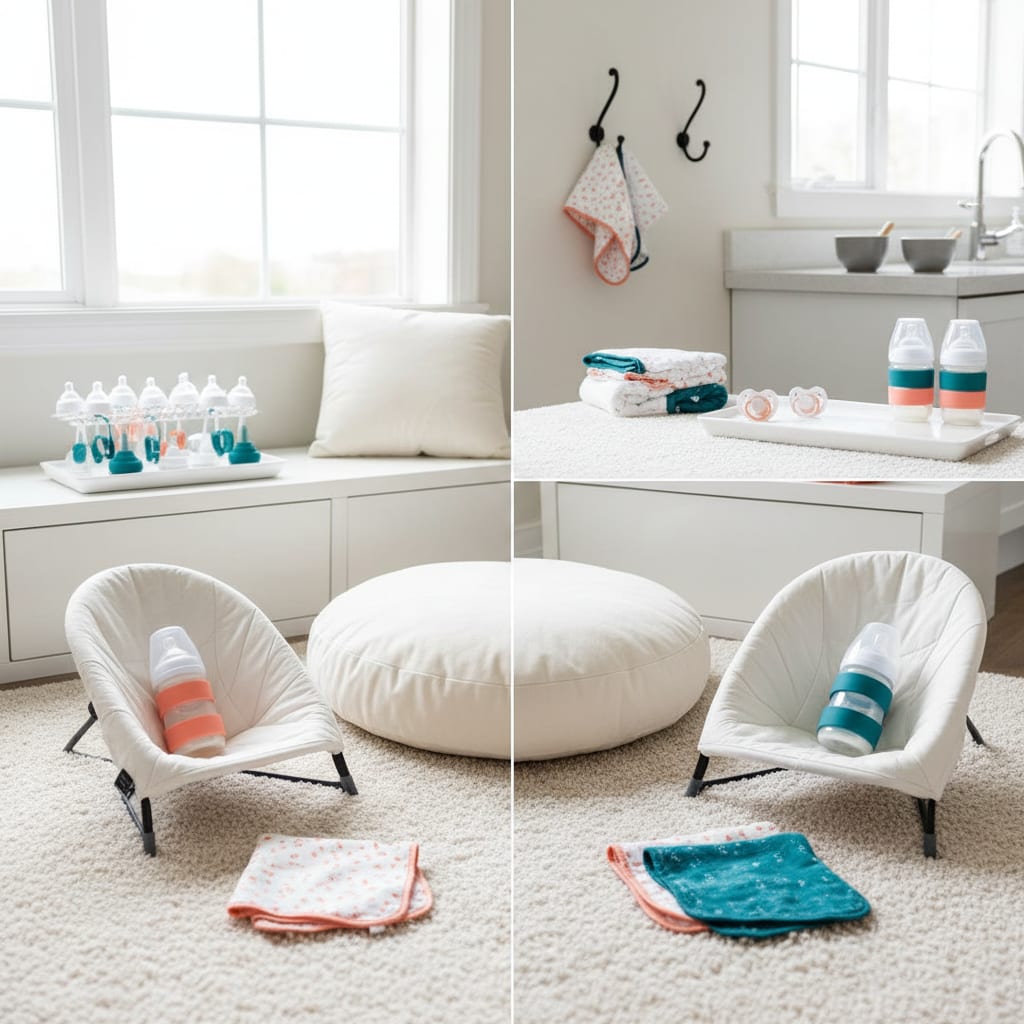
Two reclined baby seats on the floor, angled slightly toward each other, a few feet apart. You sit on the floor between them, cross-legged or against a wall, one bottle in each hand. Both babies are semi-upright with their heads higher than their stomachs, both are in your line of sight, and both bottles are under your control.
Why it works: nothing is elevated, so nothing can fall; you can see both faces, which is how you catch a baby who needs a break; and your back is supported, which matters at feed number six. A light seat you can carry from room to room — the BabyBjörn Bouncer Bliss is the usual worked example — earns its money here rather than as a place to park a baby for an hour.
Rules for this one: seats on the floor only, never on a table, sofa or counter. Harness fastened. And when the feed ends, the babies come out — a seat is a feeding and awake-time station, not a sleep surface.
Setup two: the twin pillow double-hold
The setup that feels most like feeding, and the better one for newborns who need close contact.
A twin-sized nursing pillow around your waist, one baby along each side in a football hold, heads at your elbows, bodies supported by the pillow, both slightly reclined. A hand on each bottle. The same Twin Z Pillow that gets bought for tandem breastfeeding does this job just as well for bottles, and it’s the reason the pillow is worth buying even in an exclusively bottle-fed twin house.
Warmer and slower, and the setup to use when a baby is unsettled, congested or newly home. It’s harder on your arms, so most families keep it for the calm feeds. The positioning detail carries over from the tandem breastfeeding guide — same holds, different hardware.
Setup three: one at a time, on purpose
Sometimes serial feeding is the right call, not a failure of technique: a twin who needs paced bottle feeding for reflux or a fast letdown, a baby recovering from illness, a NICU graduate with a feeding plan, or the stage where one twin is learning to hold their own bottle and the other isn’t.
Make it deliberate: feed the hungrier twin first, give the waiting twin a pacifier if you use one plus a mat and your voice, and alternate who goes first across the day so neither baby is permanently second. Accept the clock while you’re at it — serial feeding two babies runs 60 to 80 minutes a round, unsustainable eight times a day but perfectly fine for a stretch of days or one feed in six.
Burping two babies solo
The bit nobody demonstrates. What works:
- Burp both at the end, not mid-feed, unless a baby is clearly uncomfortable — one baby over each shoulder, or one on a shoulder and one sitting upright on your thigh with your hand supporting their chin and chest.
- Sitting-up burping is easier with two. Baby upright on your knee, leaning slightly forward, your hand under the jaw rather than the throat, patting with the other hand. You can do this to one baby while the other lies against your chest.
- Don’t chase a burp for ten minutes each. A few minutes, then down; some babies simply don’t burp every feed, and the burping techniques that work vary a lot by baby.
The prep shift that makes it possible
Solo bottle-feeding twins is a manufacturing problem before it’s a feeding problem, and the fix is batching:
- Make the day’s bottles in one session, not eight. Ask your pediatrician about pitcher-mixing formula if that’s your method — the rules on how long prepared formula keeps are specific and worth getting from them rather than a forum.
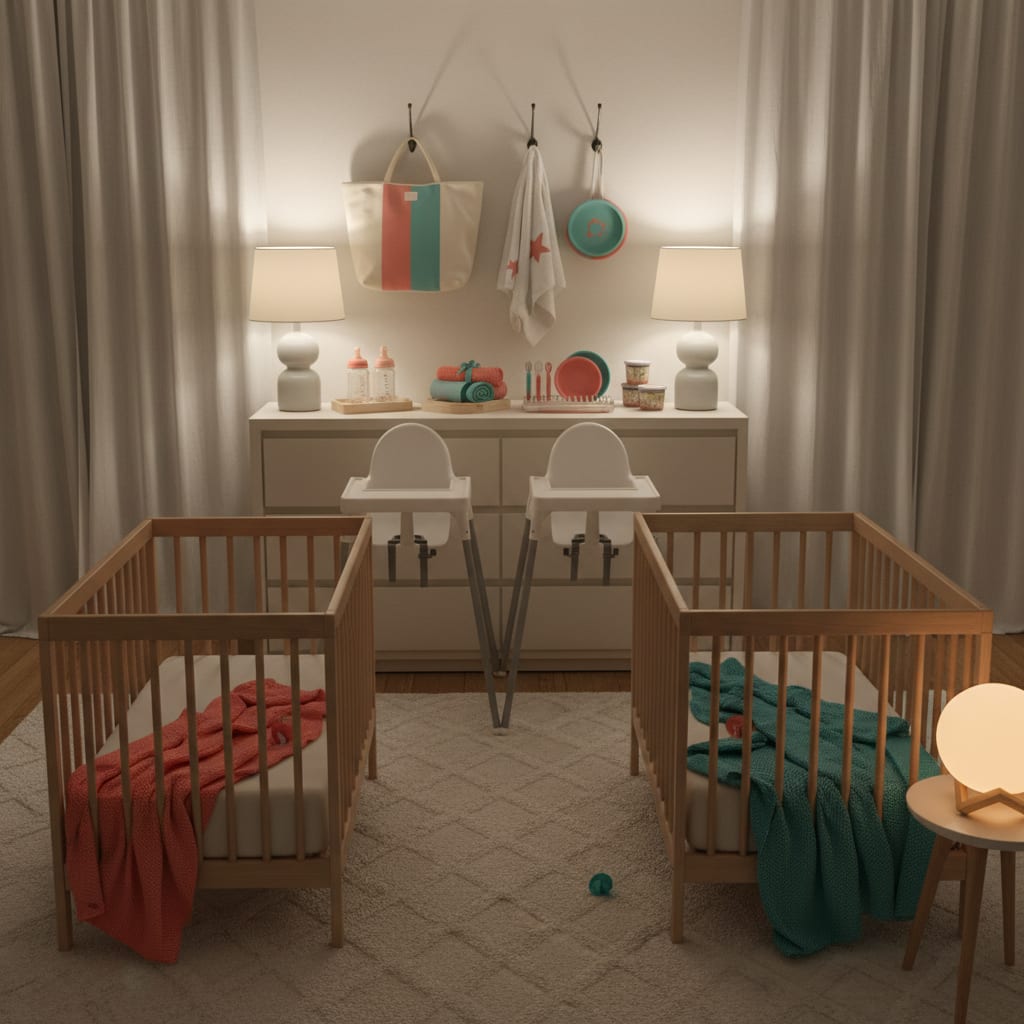
- Two bottle sets, color-coded. Coral bands on A’s bottles, teal on B’s. When the twins are on different volumes — routine — the band is what stops a mislogged feed at 3am. Bottles that come apart into few pieces make the washing shift shorter; the narrow Dr. Brown’s Options+ range is the common twin pick precisely because it’s the one most families already own spare parts for.
- Wash in bulk, once or twice a day. Sixteen bottles a day is real; sixteen individual washes is not a life.
- Log both babies. Two ounces of difference per feed compounds into a real difference by Friday, and the sheet in the twin feeding and sleep log is what makes it visible.
The whole method-by-method comparison, including what bottles cost you in money and dishwashing versus the alternatives, is in feeding twins: every method, honestly compared.
When one twin finishes first
The most common solo-feeding moment, and the one that tempts propping. Options, in order: set the finished baby’s bottle down and keep feeding the second with two hands; lift the finished baby onto your shoulder while the second keeps feeding at your other side; or put the finished baby into their seat, harnessed, on the floor, in view, and burp them when the round’s done.
What you don’t do is jam the second bottle into position with a rolled towel and go make tea. That’s the one move on this page with a real risk attached to it.
FAQ: bottle feeding twins alone
Can you bottle feed twins at the same time?
Yes — with both babies supported semi-upright and an adult holding both bottles throughout. The floor-between-two-seats setup and the twin-pillow double-hold are the two standard ways to do it, and both keep an adult hands-on for the entire feed.
Is it ever OK to prop a bottle for twins?
No. Propping is a choking and ear-infection risk and the AAP advises against it regardless of how many babies you have. If you genuinely cannot hold two bottles, feed one baby at a time — a longer round is the correct trade.
How long does bottle feeding twins take?
Roughly 30 to 40 minutes per round for a double-feed including burping, and 60 to 80 minutes if you feed them one after the other. Across six to eight rounds a day, that difference is why the double-feed is worth learning.
Do twins need identical bottle amounts?
No. Twins commonly differ by an ounce or more per feed and sometimes by a whole feed a day, especially when they were different sizes at birth. Track each baby’s actual intake rather than assuming, and take any sudden change in either twin’s feeding to your pediatrician.
How do you bottle feed twins at night alone?
Same setups, dimmer light, fewer steps: bottles prepped in advance, one station you don’t have to walk to, both babies fed in the same round, back down without a full change unless it’s needed. The night schedule is in the newborn twin schedule.