When one twin is sick and the other is well, split the room for the worst nights. Move the sick twin next to you, on their own firm, flat, bare sleep surface, because you will be checking on that baby through the night. Leave the well twin in the usual room with the usual routine. For a fever this is mostly about sleep. For a stomach bug it is also about germs, and the split buys less protection than you would hope, because the well twin has usually been exposed already. Put them back together once the sick twin has gone about two days without symptoms and the bedding has been washed.
This page covers rooms, routines and laundry. Medicine and whether a baby needs to be seen belong with your pediatrician.
Who moves: the sick twin comes to you
The NHS page on high temperature in children tells parents to “check on your child regularly, including during the night.” That is far easier with the sick baby a few feet from your bed.
So the sick twin moves, and the well twin keeps everything that stays the same: their crib, their room, their white noise, their bedtime. Our post on when to separate twins for sleep lists “a medical stretch” as one of the few good reasons to split twins.
Whichever twin moves goes onto their own sleep surface: a bassinet or a travel crib with a fitted sheet and nothing else in it. Never into your bed, and never in with the other twin. A sick baby is not an exception to safe sleep for twins. Betteroo’s guide on nights when a baby is unwell says the same: no pillows, no raised mattress, no car seat or swing to help with congestion.
A fever night
The AAP’s signs of fever page says most pediatricians count a temperature above 100.4°F (38°C) as a fever, and that fevers are “generally harmless,” a sign the body is fighting an infection.
With twins, take and write down each baby’s temperature separately, even if only one seems sick. A per-baby log, like the A|B feeding and sleep log, keeps one twin’s readings from blurring into the other’s at 3am.
Three night rules from the NHS page:
- Do not bundle the sick twin up. The NHS says not to cover a child “in too many clothes or bedclothes.” Keep the room at your usual 68 to 72°F and dress the baby as you normally would.
- Offer feeds. The NHS says to give plenty of fluids and, if your baby is breastfed, to “continue to breastfeed as normal.”
- Do not sponge them down. The same page says not to undress a child or sponge them to cool them.
The AAP’s when to call the pediatrician list is the one to keep on your phone. Call right away for a baby younger than 3 months with a temperature of 100.4°F or higher, a baby who looks very ill, is unusually drowsy or very fussy, has breathing difficulty, or has repeated vomiting or diarrhea. Call too if a fever lasts more than 24 hours in a child under 2. Preterm twins are counted by adjusted age, so say so when you call. If the fever comes with a cough and a stuffy nose, the RSV season with twins page covers the breathing signs.
A stomach bug night
Here the split is about germs as well as sleep. The CDC’s norovirus prevention page says the virus can be found in vomit or stool “even before you start feeling sick,” and can stay in stool “for 2 weeks or more” after someone feels better. Twins share a room, toys and your hands, so by the time one twin vomits, the other has usually been exposed. Splitting them cuts down on further spread and protects the well twin’s sleep. It does not guarantee the well twin stays well.
What does help, from the CDC page:
- Wash your hands with soap and water. The CDC says hand sanitizer “does not work well against norovirus” and is “not a substitute for handwashing.” Wash between babies, not just between diapers.
- Bleach for hard surfaces. The CDC gives “5 to 25 tablespoons of household bleach (5% to 8%) per gallon of water,” left on the area for at least 5 minutes. Crib rails, the changing table and the floor around the crib all count.
- Hot laundry. Wash soiled items “with detergent and hot water at the maximum available cycle length,” then machine dry on the highest heat.
A waterproof layer under the sick twin’s sheet saves a mattress. A fitted one like the Biloban waterproof crib mattress protector goes on under the fitted sheet, stays tight, and goes straight in the hot wash. Keep a spare sheet and protector by the sick twin’s bed.
For feeding, the NHS diarrhoea and vomiting page says to carry on breast or bottle feeding and, if a baby is being sick, to try “small feeds more often than usual.” It also says not to make formula weaker. The AAP’s diarrhea page says breastfeeding should continue, and that any electrolyte solution should be a store-bought one your doctor or pharmacist suggests, never homemade. The same page says to call your pediatrician for vomiting that lasts more than 12 to 24 hours, signs of dehydration, a baby who will not eat or drink, or vomit that is green, bloody or looks like coffee grounds.
Keep the twins’ things apart
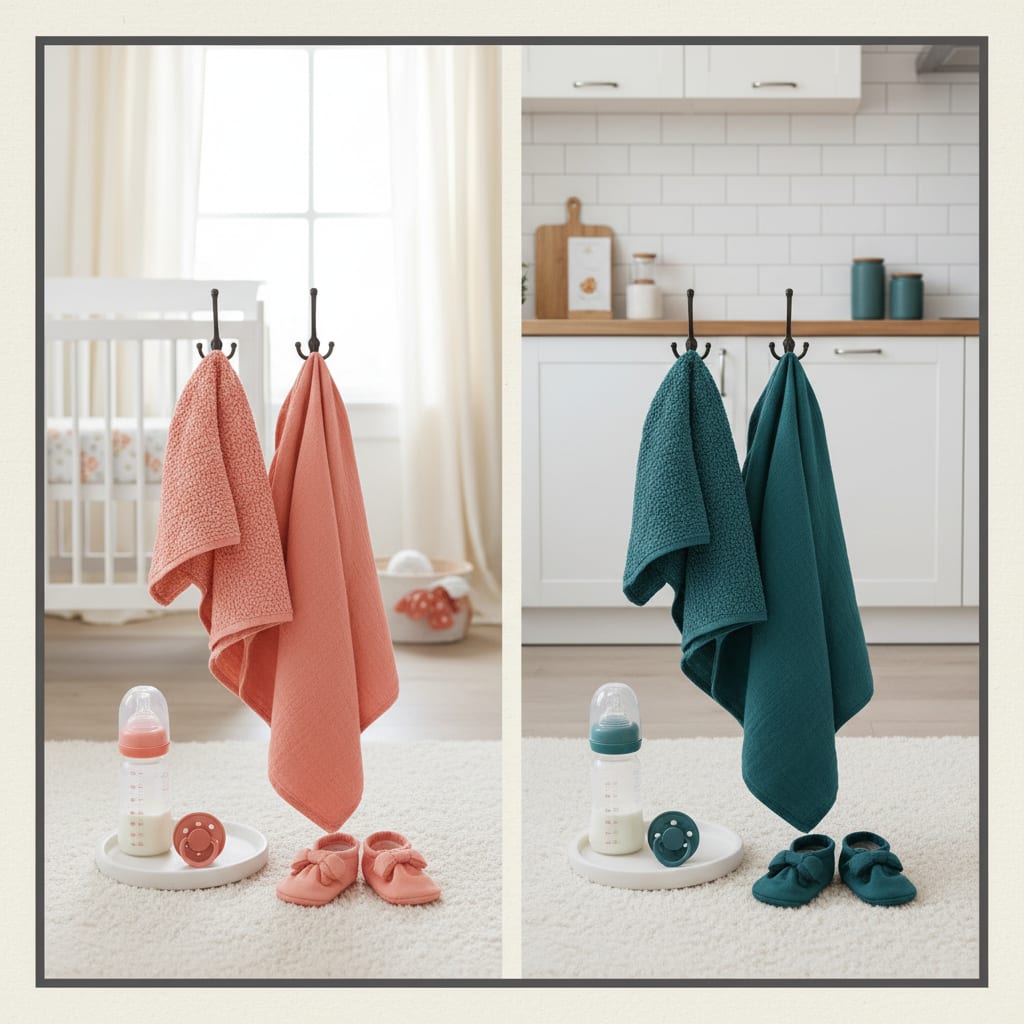
Most twin houses already colour-code, coral for A and teal for B. On a sick week, make that strict.
- Separate cups, spoons, bottles, pacifiers and burp cloths. The NHS lists not sharing towels or utensils (cutlery and utensils included) among the ways to stop a stomach bug spreading.
- Do the well twin first. Change, feed and settle the well baby, then the sick one, then wash your hands.
- Two adults, split by baby. One parent takes the sick twin for the night, the other takes the well twin. That keeps the germs on one pair of hands and lets one adult sleep in a real bed.
Putting the room back together
The CDC and the NHS both use about two days (48 hours) without symptoms as the point at which someone is fit to go back to work or school after a stomach bug. That is a sensible marker for moving the twins back together too. Wash the sick twin’s bedding and wipe the crib before they move.
Expect a night or two of extra wake-ups after the reunion. And watch the well twin closely for the next few days. If it is their turn, you already know the routine.
 Back in sync after a sick week
A bug can push one twin's naps and bedtime off course while the other stays on track. Betteroo's quiz builds a plan around one child's age and schedule, so run it once for each twin and line them back up.
Take the sleep quiz →
FAQ: one twin sick, one well
Should I separate twins when one is sick?
For the worst nights, usually yes. Move the sick twin to your room on their own flat, bare sleep surface so you can check on them, and keep the well twin’s room and routine as normal. Put them back together once the sick twin has gone about two days without symptoms.
Will my other twin catch the stomach bug?
Often, yes. The CDC says norovirus is in vomit and stool before symptoms start, so the well twin has usually been exposed by the time the first twin is sick. Handwashing with soap, bleach on hard surfaces and hot laundry cut down on further spread.
How do I know which twin has the fever?
Take each baby’s temperature separately and write it down in a separate column. Count each baby’s feeds and wet diapers separately too.