Preparing for Twins: The Third-Trimester List
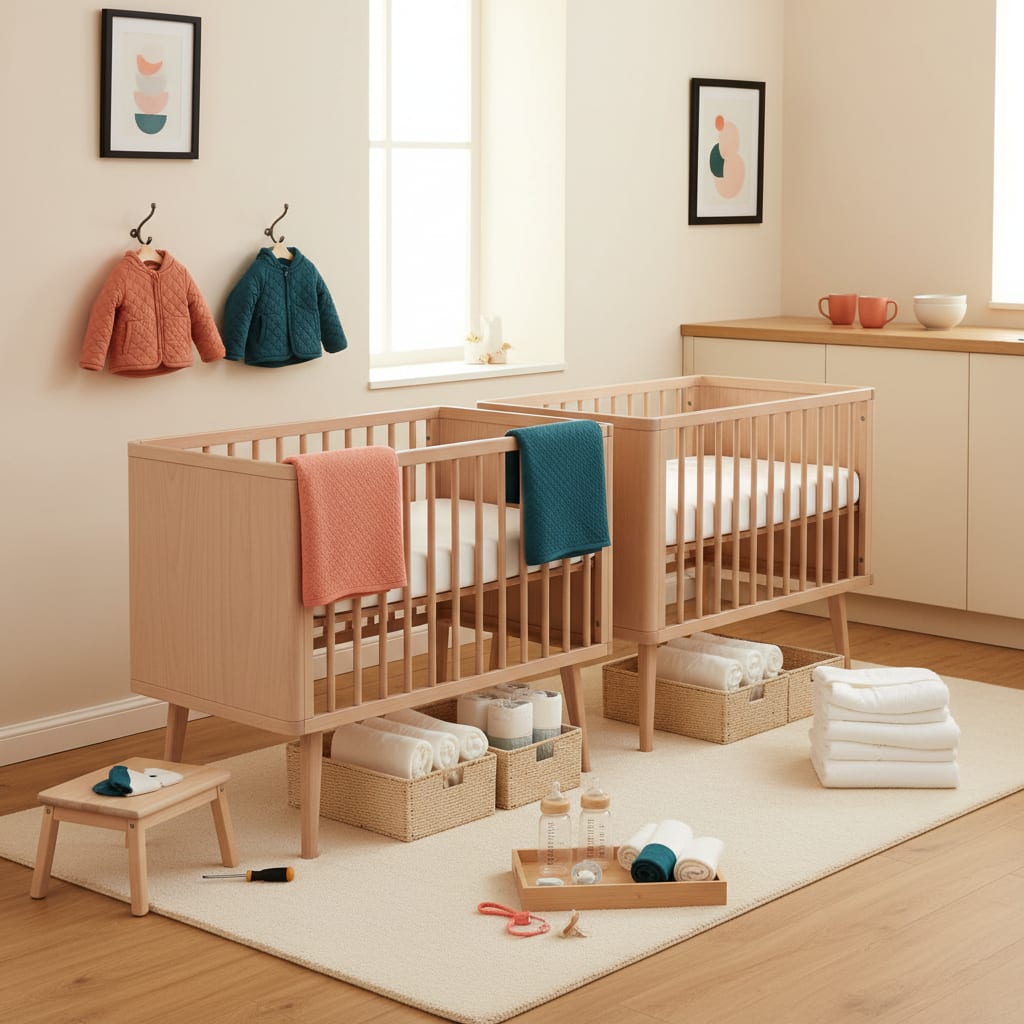
Preparing for twins in the third trimester comes down to four jobs, in this order: install (car seats, sleep surfaces, the two floors’ worth of stations), stock (freezer, consumables, medicine cabinet), arrange (help schedule, sibling cover, pediatrician), and file (leave paperwork, insurance, the admin nobody warns you about). Do them on a compressed clock — twin pregnancies more often end earlier, so a twin third trimester is planned as if it might be shorter. Your OB or MFM sets the medical timeline; this list is the household one.
The week bands, and what belongs in each
Treat these as bands rather than deadlines, and shift them earlier if your care team tells you to.
| By roughly | Get this done | Why it lands here with twins |
|---|---|---|
| 28 weeks | Registry finished, big items ordered | Delivery and assembly time is the hidden cost, not the buying |
| 30 weeks | Car seats installed and checked; sleep surfaces up | These are the two things that cannot be improvised |
| 32 weeks | Hospital bag packed and by the door; help schedule drafted | The bag stops being a project once it’s done |
| 34 weeks | Freezer stocked; stations set up on every floor | This is the point where standing and bending get expensive |
| 36 weeks | Admin filed; sibling and pet plans confirmed with backups | Anything left now should be genuinely optional |
The bands work because they front-load the physical jobs. Every twin parent I know describes the last few weeks the same way — the tasks that need a ladder, a drill or a supermarket trip get much harder, quite suddenly.
Install: the things that can’t be improvised
Two car seats, installed and checked. With twins this is a measuring exercise as much as an install: two bases in one back seat, alongside anyone else who rides there. Do it early enough that a narrower seat model is still an option. Free installation checks are widely available through fire departments and hospitals — book one rather than trusting the manual.
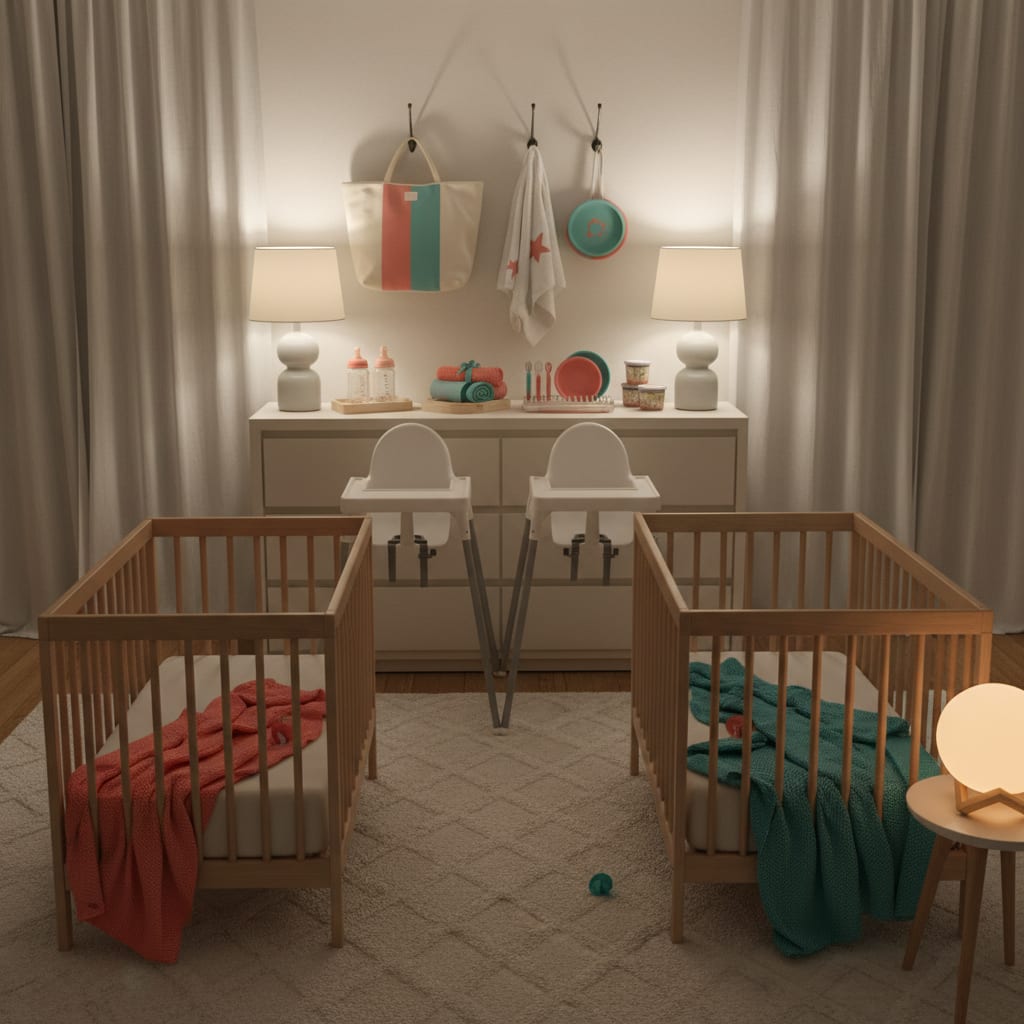
Two sleep surfaces, assembled, in the room they’ll be used in. Not boxed in a hallway. Assembled, sheeted and empty, because “empty” is the setting they stay in — the whole ruleset is in safe sleep for twins.
A station per floor. Diapers, wipes, spare clothes, burp cloths, a bin — replicated on every floor of your home. A caddy like the Munchkin portable organizer does the job for about the price of one nice babygro, and the point is that you never carry two babies up a flight of stairs to reach a wipe.
Two safe put-down spots per floor. This is the single most twin-specific item on the whole list. Two places you can set two babies down safely, within sight of each other, is what makes showering, answering the door and going to the bathroom possible in the first months.
Stock: freezer, consumables, cabinet
Freezer meals are the cliché, and the cliché is correct — with two babies, the meals you eat are the ones that reach you with one hand. Aim for things that reheat from frozen without a plan: portioned, labelled, and boring on purpose. A twin household eats more of them than anyone predicts.
For consumables, the useful mental model is weeks, not units. Two babies burn through diapers at roughly twenty a day between them at the start, so a “box” is a week rather than a month. Buy across sizes with the weight tipped toward size 1, keep one unopened pack of everything as the backstop, and set up a subscription you can pause rather than guessing.
The cabinet: your own recovery supplies matter more than the baby ones, and are the thing most often forgotten. Ask what your hospital sends you home with, and buy the rest afterwards rather than in advance.
Arrange: help is a schedule, not a sentiment
“Let me know if you need anything” converts to nothing. What works is a named schedule with specific jobs, made before the babies arrive, because afterwards nobody has the bandwidth to organise anyone.
- Fixed slots, named people. Tuesday mornings is a person; “sometime next week” is not.
- Give jobs, not baby time. Laundry, dishes, groceries, the older child’s school run, and holding a baby so you can eat. The best helper is the one who empties a dishwasher without being asked.
- A night plan, written down. Who does what overnight, and how it changes on the nights one adult goes back to work.
- Cover for the older child, with a backup for the backup. This is the plan most likely to be tested at 2am.
- Pick the pediatrician now and ask directly how they schedule twin appointments — some do both babies in one visit, which matters more than you’d think when you’re the one carrying two car seats through a waiting room.
File: the admin nobody warns you about
Not glamorous, and much easier before than after. Check your parental-leave paperwork and whether multiple births change anything about it, understand how and when two babies get added to your health insurance and what the window is, sort out the birth-certificate and social-security process for two (it’s the same process, twice, on the same day), and find out whether your employer or insurer offers anything specific for multiples. Some do; almost nobody advertises it. The related twin-specific freebie and multiple-birth programs are worth a separate afternoon of phone calls.
What to stop worrying about
Twin prep expands to fill whatever time you give it, so here is the counter-list. You do not need the nursery finished — babies sleep in your room for months. You do not need two of most things, which is the entire argument of the twin registry checklist. You do not need a schedule figured out in advance; you’ll build one from what the babies actually do, using something like the newborn twin schedule as a starting shape. And you do not need to know how long a newborn can go between feeds or how long a newborn will sleep without feeding — those answers arrive with the babies and with your pediatrician, and reading them at 33 weeks changes nothing.
FAQ: preparing for twins
When should you start preparing for twins?
Earlier than for a singleton, and the practical answer is that the physical jobs — installing, assembling, stocking — want to be done by around 32 to 34 weeks. Your OB’s guidance for your specific pregnancy sets the real timeline; plan the household work to finish before it.
What do you actually need before twins arrive?
Two car seats installed, two sleep surfaces assembled, a supply station on every floor, two safe put-down spots, a stocked freezer, and a named help schedule. That list is genuinely enough to bring two babies home to. Everything else can be ordered later, and much of it should be.
How do you prepare an older child for twins?
Concretely rather than emotionally: who will be with them during the birth, what happens at bedtime that week, and what stays the same. Confirm those arrangements with two backups, because a longer hospital stay is the scenario that tests them.
Is there anything twin-specific to organise that singleton parents don’t?
Yes, three things: the car seat fit check with two bases, the two-put-down-spots setup, and asking your pediatrician how they handle twin appointments. Also the multiple-birth admin — leave policies, insurance windows and multiples programs — which is worth a dedicated afternoon.
What’s the one thing twin parents say they wish they’d done sooner?
Set up the second floor’s station, or its equivalent — the duplicate supplies that mean you’re never stuck upstairs with two babies and no wipes. It costs very little and it changes the shape of the first three months. The bag by the door is a close second, and how to pack it is in the twin hospital bag list.