Twin Gear Returns: What Goes Back and What Replaced It
Twin gear comes back for four reasons, none of them the ones you worry about while registering: it did not fit the doorway or the trunk, only one baby liked it, the sizes drifted apart, or it could not be extended to a second baby. All four are post-purchase discoveries — you cannot research your way past them, because they need two specific babies, one hallway and one car to reveal themselves. Which makes the return window, not the registry, the tool that saves twin families the most money. Here is what goes back, what replaced it, and how to run returns when everything arrives at once.
Reason one: it fits the room but not the route
Twin gear is bigger than the space you measured. The classic return is a side-by-side double stroller that clears the living room easily and then fails at the front door, the elevator, the shop aisle or the trunk lip — and a side-by-side that will not fit your route is not a stroller you own, it is furniture. Playards are the same story at a smaller scale: two of them in one bedroom is a floor plan, not a purchase.
What replaced it, for most twin families who tell this story: an inexpensive frame stroller that clicks in both infant car seats — the Joovy Twin Roo+ is the common worked example — used for the first months while you learn how your family actually leaves the house, followed by a real double bought on evidence. The full frame-versus-side-by-side-versus-tandem breakdown is in best double strollers for twins, and the thing that reveals your true requirements is simply leaving the house a dozen times.
Measure before you open the box: narrowest doorway, trunk opening at its narrowest point, and the width of the gap between your parked car and the car next to it.
Reason two: only one baby liked it
This is the return twin parents do not see coming, because it does not exist for singleton families in the same way. You buy two identical bouncers, two identical swings, two of one pacifier, two of one bottle system — and then discover your twins have opinions, and that the opinions differ.
The pattern is consistent enough to plan around. Buy one, test it, then buy the second. A bouncer, a swing, a carrier, a pacifier shape, a bottle teat: one of each first, a week of evidence, then match it or buy the other twin something different. Twins who disagree about equipment is normal, not a sign you chose badly, and a mismatched pair of bouncers works exactly as well as a matched one.
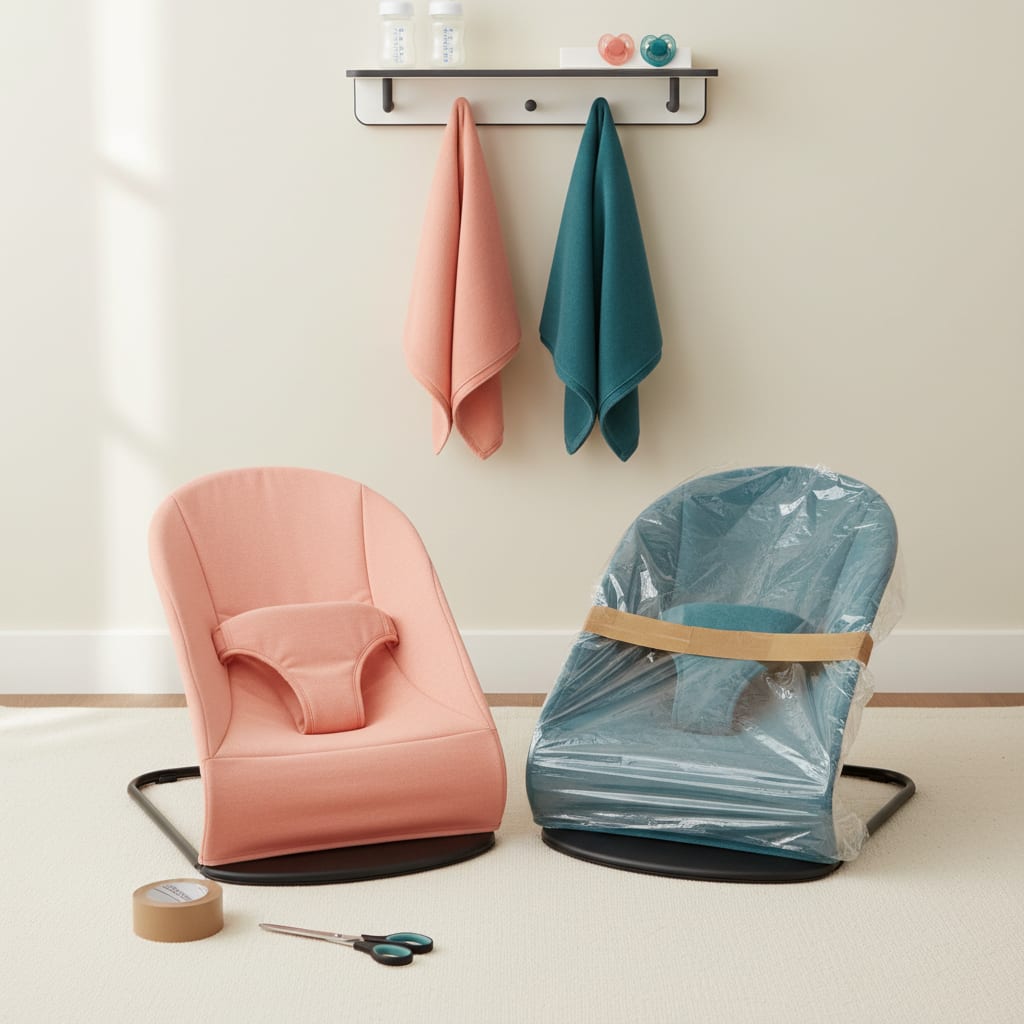
The corollary is how you open things. Open one of each pair and leave the second sealed. Unopened boxes go back at full value; a second opened box of bottle teats is yours forever.
Reason three: the sizes drifted apart
Twins are commonly born a pound or more apart and they do not converge on a schedule. Anything bought as a matched pair by month rather than by weight is a return candidate, and clothing and sleepwear are where twin households quietly lose the most money.
- Sleep sacks and swaddles bought in matched sizes. One twin swims in theirs while the other is at the top of the size. Buy by weight and fit, per baby — a wrapped swaddle like the Love to Dream Swaddle Up in two different sizes is a completely normal twin purchase, and the sizing trap is covered in full in swaddling twins.
- Newborn-size wardrobes. Either unworn entirely or outgrown in eleven days, and rarely the same answer for both babies.
- Matching outfit sets in one size. A coin flip on whether both twins are in that size at once.
Keep tags on clothing until the babies are actually in the size. Easiest return-window habit there is, and it costs nothing.
Reason four: it could not be extended to a second baby
The last category is the quiet one: gear that works perfectly and then hits a wall the day your setup changes.
The recurring example is the video monitor. One camera covers one room with two babies in frame — right up until the night one twin moves out, at which point a monitor with no add-on camera available becomes two glowing screens on a nightstand. Before you buy a monitor, check whether the model takes a second camera on the same parent unit. That one question is worth more than any feature list, and the separate-rooms logistics explain why it comes up more often for twin families than anyone warns.
The same test applies to bottle systems that get discontinued and high-chair lines where the second chair is out of stock. Twin gear should be buyable twice, later.
Running returns for two, without losing the plot
The volume is the twin-specific problem. Everything arrives at once, half of it is gifts, and the babies may arrive before you have opened any of it.
- Photograph the gift receipts the day they come in, and note the store on the box in marker. Paper receipts do not survive a twin newborn stage.
- Write the return deadline where you will see it. Windows vary by retailer and registry completion returns are often longer — check each store’s current terms rather than assuming.
- Keep the boxes for the big three: strollers, car seats and anything that needed tools. Boxed returns are accepted at full value far more often than bagged ones.
- Open in order of when you need it. Sleep surfaces, car seats and feeding gear in month one; the rest stays sealed and returnable.
- Do not open both. Worth repeating — it is the rule that saves the most money in this whole post.
The keepers, for balance
The other half of the returns pile is the stuff that never moves. For us: the twin feeding pillow, the white noise machine, and a double stroller bought at month four instead of month zero.
A Twin Z Pillow earns its space by week two and stays for months. One Dohm covers the room and runs every night for years. And the double stroller people keep — like the Baby Jogger City Mini GT2 Double — is almost always the one bought after a few months of knowing the route, not off a registry in the third trimester. The quantity sorting for everything else lives in the twin registry checklist.
The regret no return window covers
The expensive twin mistake is not a product. It is buying the forever version of something in week two, while you are exhausted, convinced the current setup is permanent, and shopping at 3am. Newborn twin logistics change completely at six weeks, three months and six months, so gear bought against a stage is gear bought against a moving target. The cheap insurance is sequencing: buy the mandatory things properly, buy everything else late and once, and treat the first two months as an experiment your babies are running on you.
FAQ: twin gear returns
What gear do twin parents return most often?
Double strollers that do not fit a doorway or trunk; duplicate bouncers and swings bought before the babies had opinions; clothing and sleep sacks bought as matched sizes; and monitors that cannot take a second camera.
Should I open both of everything when it arrives?
No — open one of each pair and leave the second sealed until the first has been used for a week. Unopened items return at full value, and twins frequently disagree about equipment, so the second box is often the wrong item anyway.
How long do I have to return baby gear?
It varies by retailer, and registry completion returns are often more generous than standard windows. Check the terms for each store as things arrive and write the deadline on the box — with twins, nobody remembers by month two.
Is it worth buying two of something cheap just in case?
Rarely. Buy one, run it for a week, then buy the second — that sequence costs nothing, and it is how you find out whether you need a matched pair or two different things.
What should I not buy until after the babies arrive?
Anything your two specific babies get a vote on: second bouncers and swings, pacifier shapes, bottle teats, and the real double stroller. Sleep surfaces and car seats are the opposite — those are bought and installed before anyone comes home.